
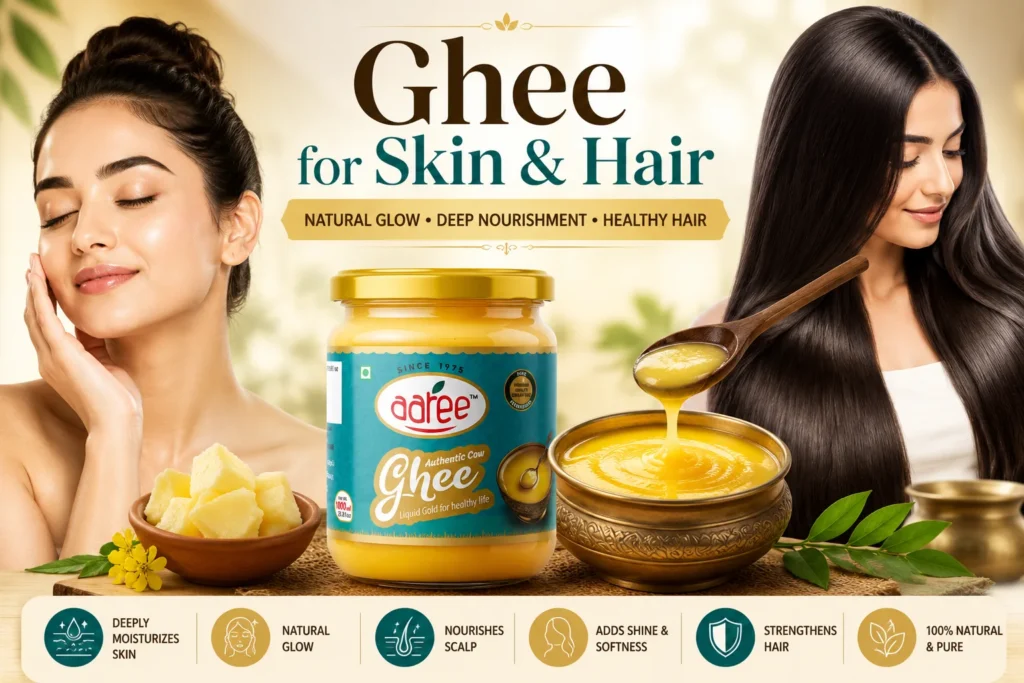
Looking for a natural way to nourish your skin and hair? Ghee for skin and hair is a traditional remedy known for its moisturizing and nourishing properties. Rich in healthy fats, vitamins A, D, E, and K, and antioxidants, ghee may help soften dry skin and condition dull, damaged hair when used properly.
Today, many people are adding this simple kitchen ingredient to their beauty routine. In this guide, you’ll discover the benefits of ghee for skin and hair, how to use it effectively, and simple DIY remedies for naturally glowing skin and healthy hair.
What Is Ghee, and Why Has It Been Used for Centuries?
Ghee is clarified butter. To make it, you simmer regular butter until the water evaporates and the milk solids separate out. What’s left is a golden, fragrant fat that doesn’t spoil quickly and handles heat well.
In Ayurveda, India’s ancient system of natural medicine, ghee holds a special place. Healers have used it for thousands of years to support digestion, calm the mind, and nourish the body. On the beauty side, people rubbed it on dry lips, massaged it into tired joints, and used it to treat minor wounds.
So this isn’t a trendy new fad. Instead, it’s a time-tested remedy backed by generations of everyday use.
What’s in Ghee That Makes It Good for Skin and Hair?
To understand why ghee works, it helps to look at what’s inside it. The nutritional profile explains a lot.
Here’s what ghee brings to the table:
- Fat-soluble vitamins (A, D, E, and K): These nourish skin cells, support repair, and protect against damage. Vitamin E, in particular, is a well-known skin healer.
- Fatty acids: Ghee is rich in healthy fats, including butyric acid, which has anti-inflammatory properties. These fats lock in moisture and strengthen your skin’s natural barrier.
- Antioxidants: These fight free radicals, the unstable molecules that speed up aging and dull your complexion.
- Conjugated linoleic acid (CLA): This compound may help with skin health and overall nourishment.
Because ghee delivers all of these in one natural package, it tackles dryness, dullness, and damage at the same time.
How Does Ghee Benefit Your Skin?
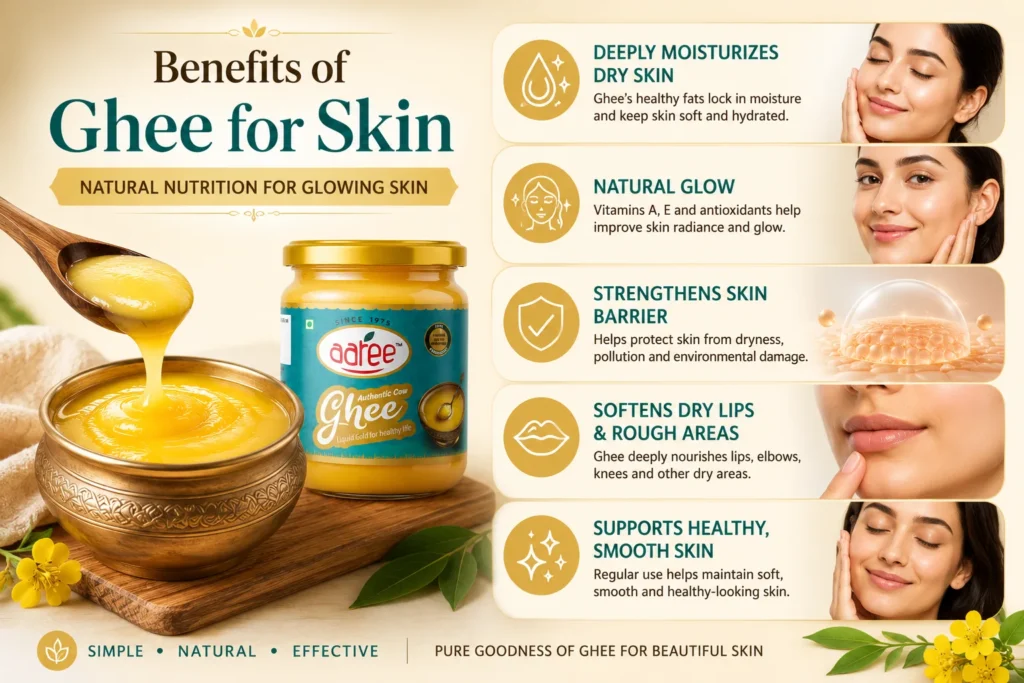
Now for the part you’ve been waiting for. Ghee for skin offers several real benefits, especially if your skin tends to be dry or rough.
Does ghee really moisturize dry skin?
Yes, and it does it well. The fatty acids in ghee sink deep into your skin and seal in moisture. As a result, your skin feels softer and stays hydrated for longer. If you struggle with flaky patches in winter, a thin layer of ghee can work wonders overnight.
Can ghee reduce fine lines and signs of aging?
It can help. The antioxidants and vitamin E in ghee fight the free radicals that break down your skin over time. Regular use may keep your skin plump and smooth, which softens the look of fine lines. While ghee won’t erase wrinkles, it does support firmer, healthier-looking skin.
Is ghee good for eczema and other skin conditions?
Many people find relief with it. Thanks to its anti-inflammatory fats, ghee may calm irritated, itchy skin linked to conditions like eczema and psoriasis. That said, ghee is not a cure. If you have a serious skin condition, check with a dermatologist before trying it.
How do you make a ghee face mask at home?
Making one is simple. Here are two easy recipes to try:
Hydrating ghee and honey mask:
- Mix one teaspoon of ghee with one teaspoon of raw honey.
- Apply it to clean skin and leave it on for 15 to 20 minutes.
- Rinse with warm water. Honey adds extra moisture and a gentle glow.
Soothing ghee and turmeric mask:
- Combine one teaspoon of ghee with a pinch of turmeric.
- Spread a thin layer over your face, then wait 10 minutes.
- Wash it off. Turmeric brightens, while ghee softens.
While many people experience softer and healthier-looking skin with regular use, results may vary depending on individual skin type and overall skincare routine.
How Does Ghee Benefit Your Hair?
Your hair can love ghee just as much as your skin does. Ghee for skin and hair is popular because it conditions, soothes, and strengthens from root to tip.
Can ghee fix dry and damaged hair?
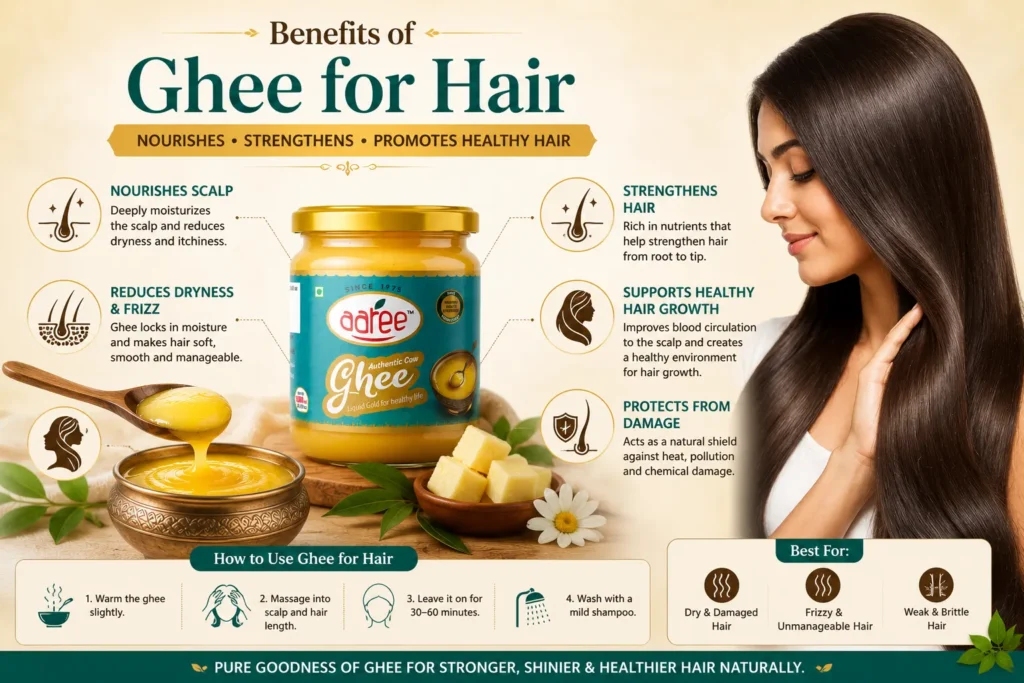
Yes. Ghee can help improve the appearance of dry and damaged hair by coating each strand with healthy fats that lock in moisture, reduce frizz, and add natural shine. After a treatment, dry, brittle hair often feels softer and looks healthier. It’s a great fix for hair damaged by heat tools or coloring.
Does ghee help with scalp health and dandruff?
It often does. A dry, flaky scalp tends to produce more dandruff, and ghee tackles the dryness at the source. Massaging warm ghee into your scalp boosts moisture and may calm itchiness. Better yet, the massage itself increases blood flow, which is good for your roots.
Can ghee promote hair growth and strength?
Indirectly, yes. While ghee won’t magically sprout new hair, a healthy, well-nourished scalp creates better conditions for growth. Stronger strands also break less, so your hair looks fuller over time.
What’s a good ghee hair mask recipe?
Try this simple deep-conditioning treatment:
- Warm two tablespoons of ghee until it melts (don’t make it too hot).
- Massage it into your scalp and work it through to the ends.
- Cover your hair with a shower cap and wait 30 to 60 minutes.
- Wash it out with a gentle shampoo. You may need two washes to remove all the oil.
For extra nourishment, mix the ghee with a teaspoon of coconut oil before applying.
Which Ghee Routine Suits Your Skin and Hair Type?
Not everyone should use ghee the same way. Tailoring your approach gets you better results.
- Dry skin or hair: You’ll benefit the most. Use ghee generously and often, since your skin and strands crave the extra moisture.
- Normal skin or hair: Use ghee now and then as a treat. A weekly mask keeps things balanced.
- Oily or acne-prone skin: Go easy here. Ghee is rich, so apply only a tiny amount and watch how your skin reacts. Spot-treat dry areas rather than coating your whole face.
- Fine or thin hair: Use a small amount and focus on the ends, not the roots. Too much can weigh your hair down.
What Should You Know Before Using Ghee on Your Body?
A few simple steps will keep your experience safe and effective.
First, choose quality ghee. Look for pure, grass-fed, or organic options when you can. Cleaner ghee means fewer additives on your skin.
Second, always do a patch test. Dab a little ghee on the inside of your wrist and wait 24 hours. If you notice redness or itching, skip it.
Third, use less than you think you need. Ghee is rich, so a little goes a long way. Too much can leave skin greasy or hair heavy.
Finally, store your beauty ghee separately from your cooking ghee to keep it clean and hygienic.
How Do You Add Ghee to a Full Beauty Routine?
The best results come from using ghee both inside and out.
On the topical side, add a face mask or hair treatment to your weekly routine. You don’t need to do it every day—once or twice a week is plenty for most people.
On the dietary side, eating ghee as part of a balanced diet may provide healthy fats and fat-soluble vitamins that support overall wellness and indirectly contribute to healthy skin and hair. A teaspoon or two a day, consumed as part of a balanced diet, is generally enough to enjoy its nutritional benefits.
Together, these inside-and-out habits help you get the most from ghee for skin and hair.
Note: The benefits of ghee for skin and hair may vary depending on individual skin type, hair type, and overall lifestyle. If you have sensitive skin, allergies, or existing skin conditions, consult a dermatologist before using ghee as part of your skincare or haircare routine.
Conclusion
Ghee is a simple, traditional ingredient that continues to be valued for its moisturizing and nourishing properties. Whether used as a face mask, hair treatment, or included in a balanced diet, it can become a useful addition to your natural beauty routine.
However, every person’s skin and hair are different, so it’s always best to start with a patch test and use high-quality, pure ghee for the best experience. With regular and mindful use, ghee may help support softer skin, shinier hair, and an overall healthy appearance.
Things to Remember Before Using Ghee
- Always perform a patch test before first use.
- Use pure, high-quality ghee without additives.
- Avoid excessive application, especially on oily skin.
- Wash hair thoroughly after a ghee treatment.
- Consult a dermatologist if you have chronic skin conditions or allergies.
Frequently Asked Questions
Can I apply ghee on my face overnight?
Yes, you can. A thin layer of ghee works as an overnight moisturizer, especially for dry skin. Just use a small amount so you don’t wake up feeling greasy. If you have oily or acne-prone skin, it’s better to leave it on for 20 minutes and rinse instead.
Is ghee good for dry skin?
Very much so. Ghee is one of the best natural options for dry skin because its fatty acids lock in deep moisture. Regular use leaves skin feeling soft, smooth, and well-hydrated.
Can ghee reduce hair dryness?
Yes. Ghee coats and conditions each strand, which smooths frizz and restores moisture to dry, brittle hair. A weekly ghee hair mask can make a noticeable difference.
How often should I use ghee on my hair?
Once a week works well for most people. If your hair is very dry or damaged, you can use it twice a week. For fine hair, stick to once a week and use a small amount.
Can oily skin use ghee?
Yes, but with care. People with oily or acne-prone skin should use only a tiny amount and spot-treat dry areas. Always do a patch test first, since ghee is rich and may feel heavy on oily skin.
Is A2 ghee better for skin and hair?
A2 ghee comes from certain cow breeds and is often marketed as purer or easier to digest. For topical beauty use, regular pure ghee works fine too. If you prefer A2 for dietary reasons, it’s a quality choice—just make sure it’s clean and additive-free.
Can I mix ghee with aloe vera?
Yes, and it’s a great combo. Aloe vera adds soothing, cooling hydration, while ghee seals in moisture. Mix a little of each for a calming face or scalp treatment.
Does eating ghee improve skin glow?
It can help. Eating a small amount of ghee gives your body healthy fats and fat-soluble vitamins that support skin health from within. Keep it moderate—a teaspoon or two a day is enough to enjoy the benefits.