
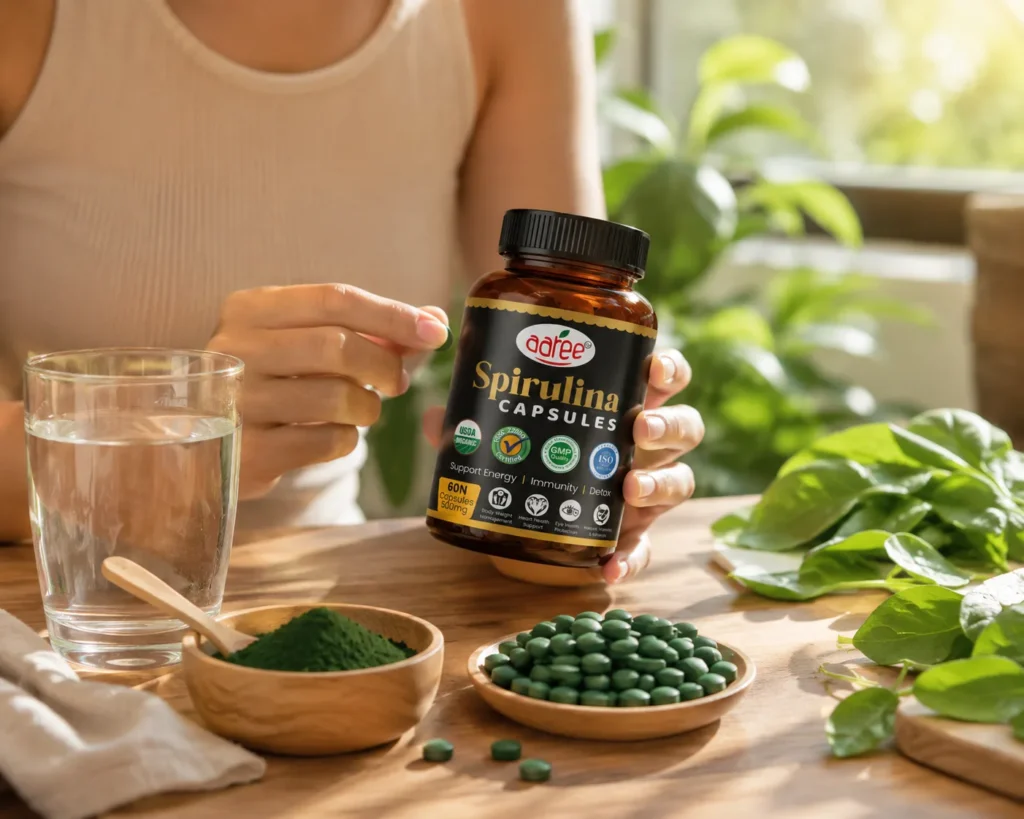
For most healthy adults, the recommended spirulina tablets dosage is between 1 and 3 grams per day. If you’re taking spirulina for the first time, it’s better to start with 1 gram daily and slowly increase the amount over the next week or two. This gives your body time to adjust and may help reduce the chance of digestive discomfort.
Although some research has used higher doses of up to 8 grams per day, you should always follow the dosage mentioned on the product label and consult your healthcare provider if you have any medical condition or take prescription medications.
Key Takeaways
- Most adults can safely take 1–3 grams of spirulina tablets daily.
- Beginners should start with a smaller dose and increase gradually.
- Taking spirulina with food may help prevent stomach discomfort.
- Morning or before meals is often the best time to take it.
- Always choose a high-quality, third-party tested supplement.
- Spirulina works best alongside a balanced diet and healthy lifestyle.
Introduction
If you’ve recently bought a bottle of spirulina tablets, one of the first questions that probably came to mind is, “How many tablets should I take every day?”
It’s a common question, and the answer isn’t exactly the same for everyone.
Your ideal spirulina tablets dosage depends on several factors, including your health goals, body weight, the strength of the tablets, and whether you’re taking spirulina for general wellness or a specific purpose.
The good news is that most people don’t need large amounts to enjoy its nutritional benefits. In fact, starting with a smaller dose and staying consistent often works better than taking a high dose from day one.
In this guide, we’ll explain the recommended dosage, the best time to take spirulina tablets, possible side effects, and simple tips to help you choose a quality supplement.
Note: This article is for educational purposes only and should not replace professional medical advice.
What Is Spirulina?
Spirulina is a naturally occurring blue-green algae that has been consumed for many years because of its impressive nutritional profile. Today, it is widely available as a powder, capsule, or tablet, making it easy to include in a daily routine.
Despite its tiny size, spirulina contains several important nutrients, including:
- Plant-based protein
- Iron
- B vitamins
- Beta-carotene
- Essential amino acids
- Antioxidants such as phycocyanin
Because of these nutrients, many people add spirulina to their diet to support overall health and wellness.
Why Do People Take Spirulina Tablets?
Spirulina tablets are convenient, easy to carry, and simple to include in a daily routine. Unlike spirulina powder, they don’t have a strong taste, which many people prefer.
People commonly take spirulina to:
Support Daily Energy
Spirulina contains nutrients that help support normal energy metabolism and overall vitality.
Add More Antioxidants to the Diet
Its natural antioxidants may help protect cells from oxidative stress.
Support Immune Health
Many people include spirulina as part of a healthy lifestyle to help maintain normal immune function.
Increase Plant-Based Nutrition
Vegetarians and vegans often use spirulina as an additional source of plant protein and essential nutrients.
Promote General Wellness
Combined with a balanced diet and regular exercise, spirulina can be a valuable nutritional supplement.
What Is the Recommended Spirulina Tablets Dosage?
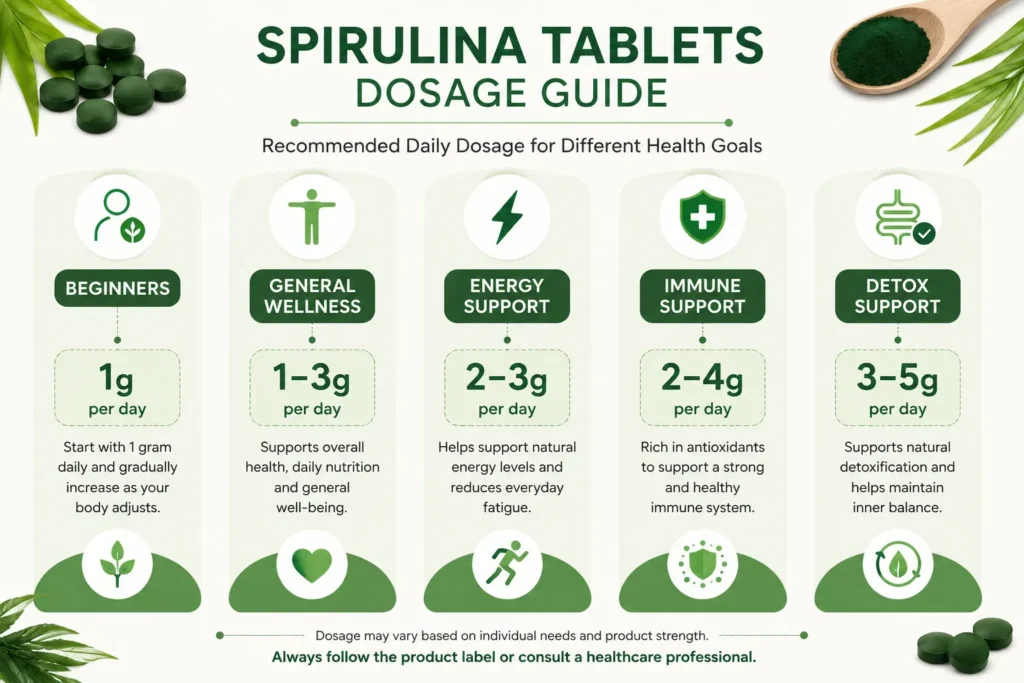
For most healthy adults, 1 to 3 grams per day is considered a practical and commonly recommended dosage.
If your tablets contain 500 mg each, that usually means taking 2 to 6 tablets daily.
If you’re new to spirulina, begin with 1 gram per day for the first week. If your body tolerates it well, you can gradually increase the amount based on your needs.
Starting slowly is a simple way to make the transition easier for your digestive system.
Spirulina Tablets Dosage Based on Your Goal
| Health Goal | Recommended Daily Dosage |
| General wellness | 1–3 grams |
| Daily energy support | 2–3 grams |
| Immune support | 2–4 grams |
| Detox support | 3–5 grams |
| Weight management | Around 2 grams before meals |
| Beginners | Start with 1 gram |
Keep in mind that these are general guidelines and individual needs can vary.
What Can Affect Your Spirulina Dosage?
Not everyone needs the same amount of spirulina. Several factors can influence the ideal dosage.
Your Body Weight
People with larger body sizes may require slightly higher amounts than those with smaller body frames.
Your Health Goals
Someone taking spirulina for general nutrition may choose a lower dose than someone using it as part of an active fitness routine.
Tablet Strength
Always read the product label carefully. Some tablets contain 500 mg, while others contain 1000 mg.
Overall Health
If you have a medical condition or take prescription medications, consult your healthcare provider before taking spirulina regularly.
How Should You Take Spirulina Tablets?
Taking spirulina correctly can improve both comfort and consistency.
With Food or on an Empty Stomach?
Although spirulina can be taken on an empty stomach, many people prefer taking it with breakfast or lunch because it may reduce mild stomach discomfort.
Best Time to Take Spirulina
There isn’t a single perfect time, but many people prefer:
- Morning for daily energy support
- Before meals as part of a weight management routine
- With breakfast or lunch for easier digestion
If you notice that spirulina gives you more energy, avoid taking it late at night.
Are There Any Side Effects?
Most healthy adults tolerate spirulina well when taken within the recommended dosage.
However, some beginners may notice mild side effects, including:
- Bloating
- Upset stomach
- Headache
- Nausea
These symptoms are often temporary and may improve when starting with a lower dose.
Who Should Avoid Spirulina?
Although spirulina is considered safe for many people, it may not be suitable for everyone.
Talk to your healthcare provider before taking spirulina if you:
- Have an autoimmune disorder
- Are pregnant or breastfeeding
- Have phenylketonuria (PKU)
- Take blood-thinning medications
- Take immune-suppressing drugs
- Have an existing medical condition
Professional guidance is always the safest approach before starting any new supplement.
How to Choose a Good Spirulina Supplement
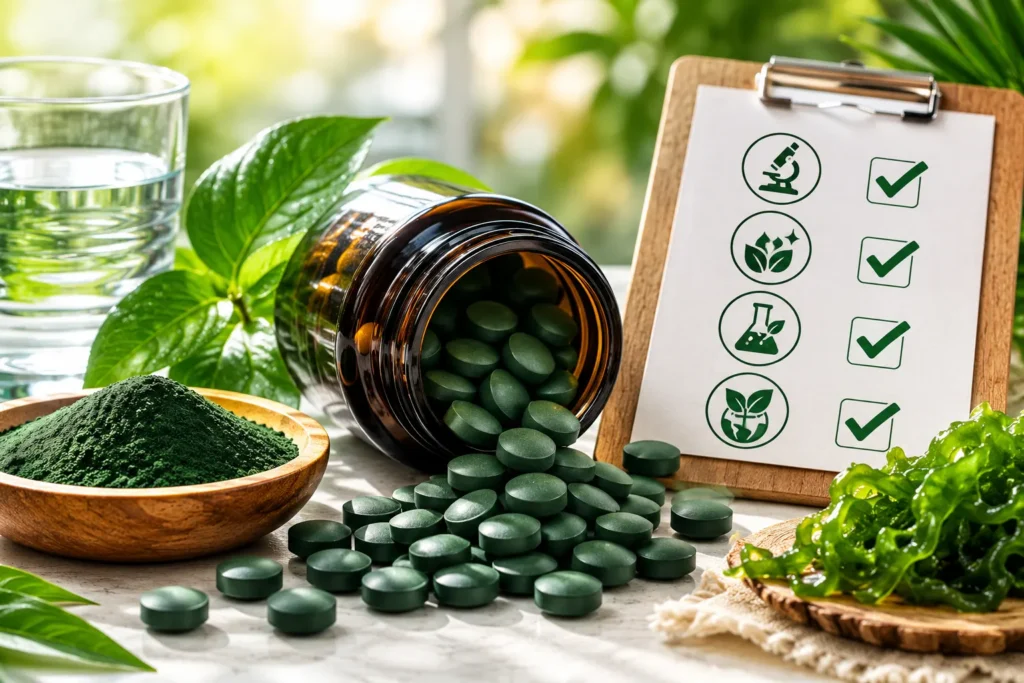
Not all spirulina supplements are the same. Choosing a quality product makes a difference.
Look for Third-Party Testing
Independent testing helps confirm the product’s purity and quality.
Buy from Trusted Brands
Choose manufacturers that are transparent about sourcing and quality standards.
Read the Ingredient List
Avoid products that contain unnecessary fillers, artificial colours, or excessive additives.
Check the Source
Since spirulina absorbs substances from its environment, supplements grown under controlled conditions are generally a better choice.
Common Mistakes People Make
If you’re starting spirulina, avoid these common mistakes:
- Taking a high dose on the first day
- Ignoring the dosage instructions on the label
- Buying low-quality supplements
- Expecting immediate results
- Using spirulina instead of maintaining a healthy diet
Consistency and patience usually produce better results than taking large amounts occasionally.
Our Take
At AAREE India, we encourage a simple and balanced approach to supplementation. If you’re new to spirulina tablets, starting with a lower dose and gradually increasing it is often the most comfortable way to build a daily habit.
We also believe that no supplement can replace healthy eating, regular exercise, quality sleep, and proper hydration. Spirulina should be viewed as a nutritional addition to your lifestyle rather than a quick solution.
Most importantly, choose products from trusted manufacturers that prioritise purity and quality, and don’t hesitate to seek professional advice if you have any health concerns.
Conclusion
Choosing the right spirulina tablets dosage doesn’t have to be confusing. For most healthy adults, 1 to 3 grams per day provides a sensible starting point. Beginners should start small, stay consistent, and increase the dosage gradually if needed.
Equally important is selecting a high-quality supplement and combining it with a balanced diet and healthy lifestyle. Used responsibly, spirulina can be a convenient way to add valuable nutrients to your daily routine.
Frequently Asked Questions
How many spirulina tablets should I take daily?
If your tablets contain 500 mg each, most adults take between 2 and 6 tablets per day, depending on their health goals and the manufacturer’s recommendations.
Can I take spirulina every day?
Yes. Most healthy adults can safely include spirulina in their daily routine when taken within the recommended dosage.
Can taking too much spirulina cause problems?
Taking more than recommended may lead to mild digestive discomfort, nausea, bloating, or headaches. Starting with a lower dose can help reduce these effects.
Is morning the best time to take spirulina?
Many people prefer taking spirulina in the morning because they feel more energetic during the day. However, taking it with breakfast or lunch is also a good option.
How long does spirulina take to show results?
Some people notice changes within one or two weeks, while others may take several weeks of regular use alongside a healthy lifestyle to experience noticeable benefits.
Medical Disclaimer
This article is intended for educational purposes only and should not be considered medical advice. Individual nutritional needs vary from person to person. If you are pregnant, breastfeeding, have a medical condition, or take prescription medications, consult a qualified healthcare professional before using spirulina supplements.