
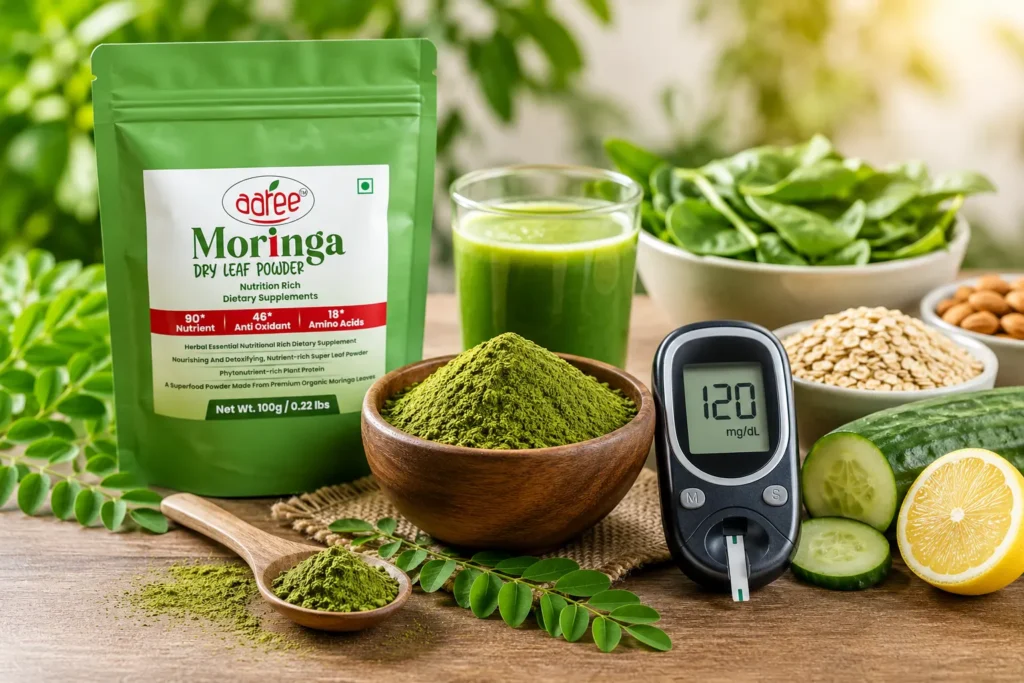
Diabetes is a common health condition that requires proper blood sugar management through a healthy diet, regular exercise, and prescribed treatment. Along with these habits, many people also explore natural foods that may support their overall health. One such option is Moringa Powder for Diabetes, which is known for its rich content of vitamins, minerals, antioxidants, and fiber.
Some studies suggest that moringa powder may help support healthy blood sugar levels and overall metabolic health when included as part of a balanced lifestyle. However, it is not a substitute for diabetes medication or professional medical care. In this article, you’ll learn about the benefits of moringa powder, the recommended dosage, possible side effects, the best time to take it, and what current scientific research says.
Medical Disclaimer: This article is for educational purposes only. It does not replace professional medical advice, diagnosis, or treatment. Always consult your healthcare provider before adding moringa powder to your routine, especially if you have diabetes or take prescription medication.
What Is Moringa Powder?
Moringa powder is made by drying and grinding the leaves of the moringa tree into a fine green powder. People have used moringa in traditional diets for centuries because it provides essential nutrients and antioxidants.
Today, many people add moringa powder to smoothies, soups, yogurt, buttermilk, and herbal drinks to increase their daily nutrient intake. Since it contains fiber, vitamins, and plant compounds, it has become popular among health-conscious individuals.
Nutritional Value of Moringa Powder
| Nutrient | Potential Health Benefit |
| Fiber | May support slower glucose absorption |
| Vitamin C | Supports immune health and antioxidant activity |
| Iron | Helps maintain healthy red blood cells |
| Calcium | Supports bone health |
| Magnesium | May support normal insulin function |
| Potassium | Helps maintain healthy blood pressure |
| Protein | Supports muscle maintenance |
| Polyphenols | May help reduce oxidative stress |
Because of this nutrient profile, many researchers continue to study moringa for its potential role in metabolic health.
Moringa Powder for Diabetes: Benefits
Blood Sugar Control
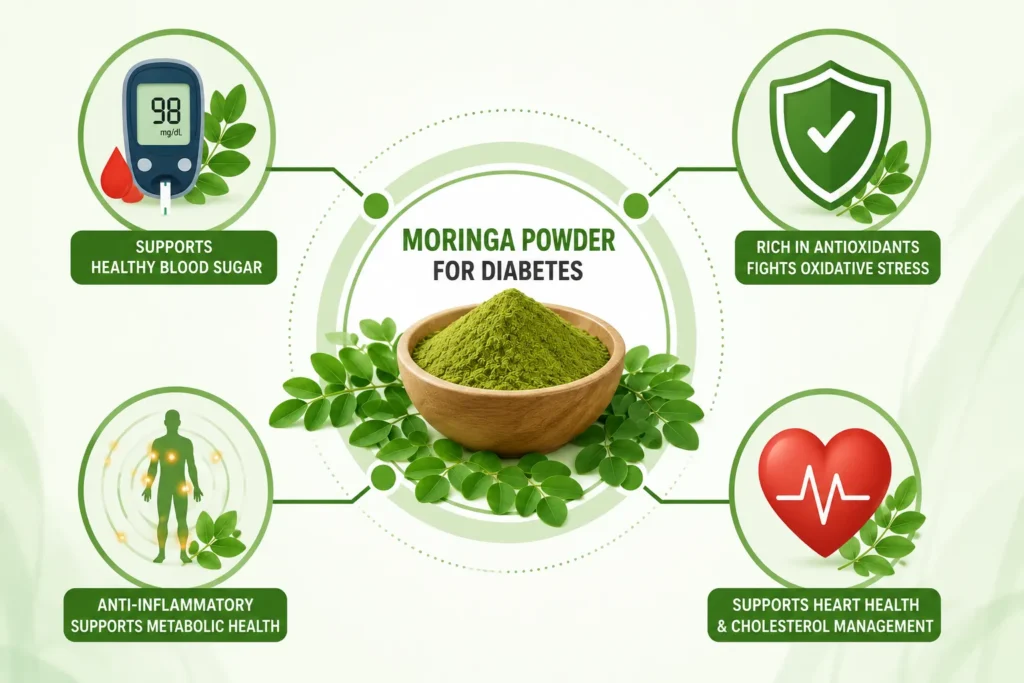
One of the most discussed benefits of Moringa Powder for Diabetes is its possible effect on blood sugar management. Some studies suggest that moringa contains compounds such as chlorogenic acid and isothiocyanates, which may help the body process glucose more effectively.
In addition, the fiber found in moringa powder may slow carbohydrate digestion. As a result, the body may absorb sugar more gradually after meals, helping to reduce sudden spikes in blood glucose.
Although these findings are encouraging, current evidence remains limited. Therefore, moringa powder should complement—not replace—your prescribed diabetes treatment plan.
Antioxidant Properties
Oxidative stress can damage cells and may contribute to diabetes-related complications over time. Fortunately, moringa powder contains antioxidants such as quercetin, vitamin C, and beta-carotene that help protect cells from free radical damage.
Moreover, antioxidants support overall health by reducing oxidative stress throughout the body. Including antioxidant-rich foods in a balanced diet may contribute to better long-term wellness.
Anti-Inflammatory Effects
Chronic inflammation may interfere with normal insulin function and metabolic health. Moringa contains natural anti-inflammatory compounds that researchers believe may help reduce inflammation.
Consequently, regular consumption as part of a healthy diet may support better metabolic balance. However, more human studies are needed to confirm these effects.
Cholesterol Management
People with diabetes often face an increased risk of heart disease. For this reason, maintaining healthy cholesterol levels is important.
Some research indicates that moringa powder may help reduce LDL (“bad”) cholesterol while supporting healthy lipid levels. Although these findings are promising, scientists continue to study its long-term cardiovascular benefits.
Recommended Dosage and Administration
Currently, there is no official recommended dosage for moringa powder. However, many adults begin with ½ to 1 teaspoon (2–5 grams) per day and adjust gradually if tolerated.
Starting with a smaller amount allows your body to adapt while reducing the chance of digestive discomfort.
Ways to Take Moringa Powder
- Mix it with warm water.
- Add it to smoothies.
- Blend it into buttermilk.
- Stir it into yogurt.
- Sprinkle it over salads.
- Mix it into soups.
- Add it to dosa or chapati dough.
Consistency is often more important than taking large amounts. Moderate daily use may provide better long-term benefits than occasional high doses.
Potential Side Effects and Precautions
Most healthy adults tolerate moringa powder well when consumed in moderation. Nevertheless, some people may experience mild digestive discomfort during the first few days.
Possible side effects include:
- Bloating
- Nausea
- Loose stools
- Mild stomach upset
In addition, moringa powder may lower blood sugar levels. People taking diabetes medication should monitor their blood glucose carefully because combining both may increase the risk of hypoglycemia.
The following groups should consult a healthcare professional before using moringa powder:
- Pregnant women
- Breastfeeding mothers
- People with diabetes
- Individuals taking blood pressure medication
- People using thyroid medication
- Anyone with chronic medical conditions
Best Time to Take Moringa Powder for Diabetes
Many people ask whether timing affects the benefits of moringa powder.
Although there is no universal rule, several common approaches exist.
| Time | Possible Benefit |
| Morning | May support daily nutrient intake |
| Before meals | May support healthy blood sugar response |
| With breakfast | Easier to include in a routine |
| With smoothies | Improves convenience and taste |
Most importantly, taking moringa powder consistently as part of a healthy lifestyle may provide the greatest benefit over time.
How to Incorporate Moringa Powder into Your Diet
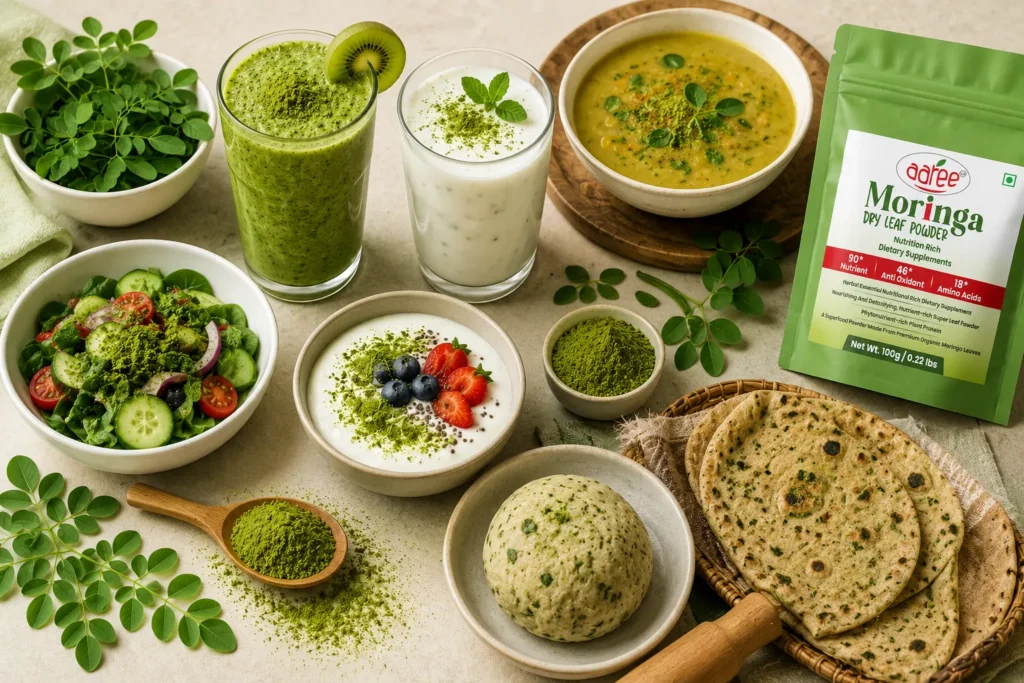
Adding moringa powder to your meals does not require major dietary changes.
You can easily include it by:
- Mixing it into vegetable smoothies
- Adding it to yogurt
- Stirring it into soups
- Blending it with buttermilk
- Sprinkling it over salads
- Mixing it into homemade chutneys
- Adding it to healthy energy balls
- Combining it with dosa or idli batter
These simple methods make it easier to enjoy moringa powder every day.
Scientific Research on Moringa Powder for Diabetes
Scientists continue to investigate the potential benefits of moringa powder for diabetes management.
Several animal studies suggest that moringa may help lower blood glucose levels and improve insulin activity. Additionally, a few small human studies have reported improvements in fasting blood sugar after regular consumption.
Despite these encouraging findings, the available evidence has limitations. Most studies involve small sample sizes, different dosages, or short follow-up periods.
Therefore, researchers agree that larger and longer clinical trials are necessary before firm conclusions can be made. Current evidence suggests that moringa powder may support blood sugar management, but it should not replace established medical treatment.
Frequently Asked Questions
Can moringa powder lower blood sugar?
Some studies suggest that moringa powder may help support healthy blood sugar levels. However, more research is needed, and individual results may vary.
Can people with type 2 diabetes take moringa powder daily?
Many people consume moringa powder daily in moderate amounts. However, anyone with type 2 diabetes should consult a healthcare professional before adding it to their routine.
What is the best time to take moringa powder for diabetes?
Many people prefer taking it in the morning or before meals. Consistent daily use may be more important than the exact timing.
How much moringa powder should I take per day?
A common starting amount is ½ to 1 teaspoon (2–5 grams) daily. Starting with a small amount helps your body adjust gradually.
Can moringa powder replace diabetes medication?
No. Moringa powder is a dietary supplement and should never replace prescribed diabetes medication or medical advice.
Are there any side effects of moringa powder for diabetes?
Some people may experience mild digestive discomfort or low blood sugar when taking it alongside diabetes medication.
Can I take moringa powder on an empty stomach?
Yes, many people tolerate it well on an empty stomach. However, if it causes stomach discomfort, taking it with food may be a better option.
Conclusion
Moringa Powder for Diabetes may offer several health benefits, including support for healthy blood sugar levels, antioxidant protection, and overall metabolic wellness. However, current research is still evolving, so it should be used as a supportive dietary addition rather than a replacement for prescribed treatment.
When combined with a balanced diet, regular exercise, and proper medical care, moringa powder may become a valuable part of a healthy lifestyle. Always consult your healthcare provider before adding it to your routine, especially if you take diabetes medication.