
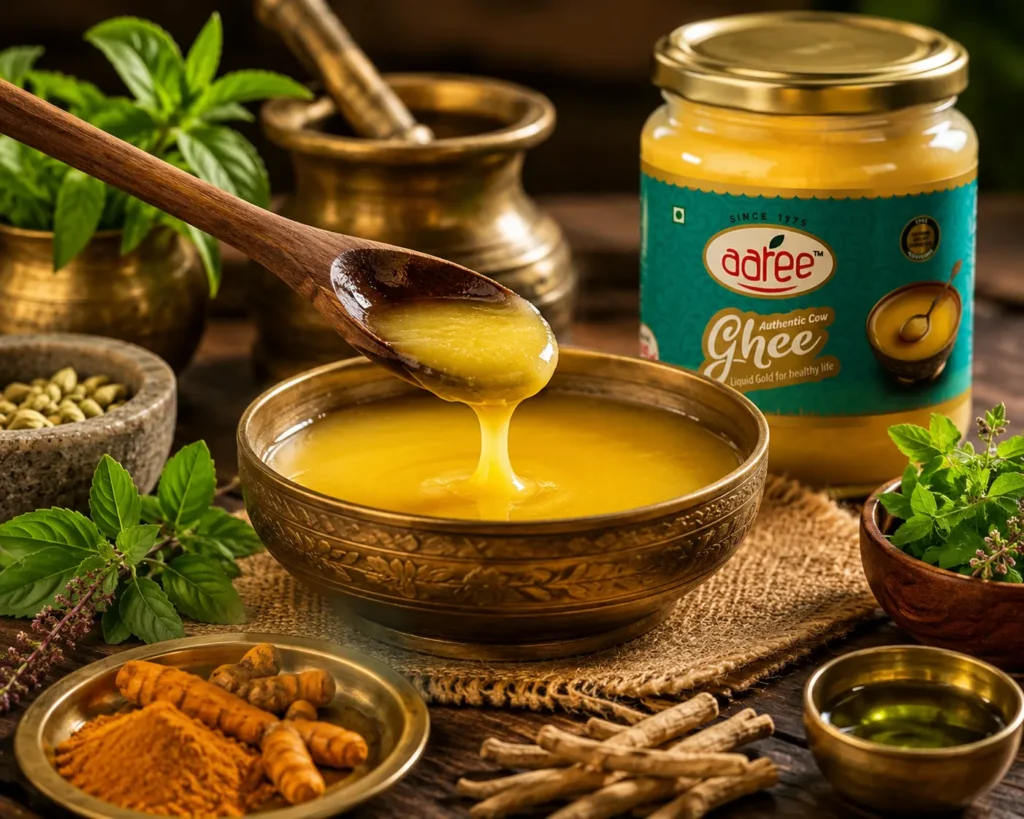
Desi cow ghee has been an important part of Ayurvedic traditions for centuries. Ayurveda values desi cow ghee for its ability to support digestion, nourish body tissues, and help transport nutrients throughout the body. In addition, traditional preparation methods such as the bilona process are believed to preserve many of its beneficial properties.
Many people assume that all ghee products offer similar benefits. However, traditional desi cow ghee differs from many commercially prepared varieties in terms of sourcing, preparation methods, and nutritional composition. As a result, the quality and characteristics of ghee can vary significantly.
In Ayurveda, desi cow ghee is more than a cooking ingredient. Practitioners have traditionally used it in dietary routines, herbal formulations, and wellness practices. This article explores what makes desi cow ghee unique and why it continues to hold an important place in Ayurvedic healing.
What Makes Traditional Ghee Different from Clarified Butter?
Many modern nutrition discussions group all fats into a single category. However, different fats have unique nutritional properties and functions within the body.
Commercial ghee is often produced directly from cream or butter through a simplified heating process. While it serves as a cooking fat, its preparation method differs from traditional Ayurvedic techniques.
In contrast, traditional desi cow ghee is usually prepared from cultured yogurt using the bilona method. During this process, milk is first converted into curd, then churned into butter, and finally slow-heated to produce ghee. As a result, many people value bilona-made desi cow ghee for its traditional preparation and distinctive characteristics.
Why Milk Quality Matters in Ayurveda
The quality of milk plays an important role in determining the quality of desi cow ghee. For this reason, Ayurveda places significant importance on the source of ingredients.
Farming practices, animal care, and feeding methods can influence the nutritional profile of milk. Consequently, the final characteristics of ghee may vary depending on how the cows are raised.
Traditionally, Ayurveda favors milk obtained from grass-fed and naturally raised cows. These cows consume a diverse diet and spend time outdoors. As a result, their milk may contain beneficial nutrients, including fat-soluble vitamins and conjugated linoleic acid (CLA), which contribute to the overall quality of the ghee.
Supporting Digestion and Gut Health Naturally
According to Ayurvedic principles, digestion plays a central role in overall well-being. Therefore, foods that support healthy digestion are often given special importance.
Ayurvedic ghee is traditionally used to support digestive comfort and help maintain balance within the digestive system. In addition, it contains butyric acid, a short-chain fatty acid that has gained attention for its role in supporting gut health.
Many Ayurvedic practitioners recommend including small amounts of ghee in daily meals. When consumed as part of a balanced diet, it may help support digestive wellness and overall comfort.
The Role of Ghee in Nutrient Absorption
A nutritious diet provides essential vitamins and minerals. However, the body must absorb these nutrients effectively to gain their full benefits.
Several important vitamins, including vitamins A, D, E, and K, are fat-soluble. This means they require dietary fat for proper absorption. As a result, including healthy fats in the diet can support nutrient utilization.
Ayurveda describes ghee as a “yogavahi,” meaning a substance that helps carry the qualities of other ingredients deeper into the body’s tissues. For this reason, practitioners often combine herbs with cow ghee in traditional Ayurvedic preparations.
Practical Ways to Use Ghee Daily
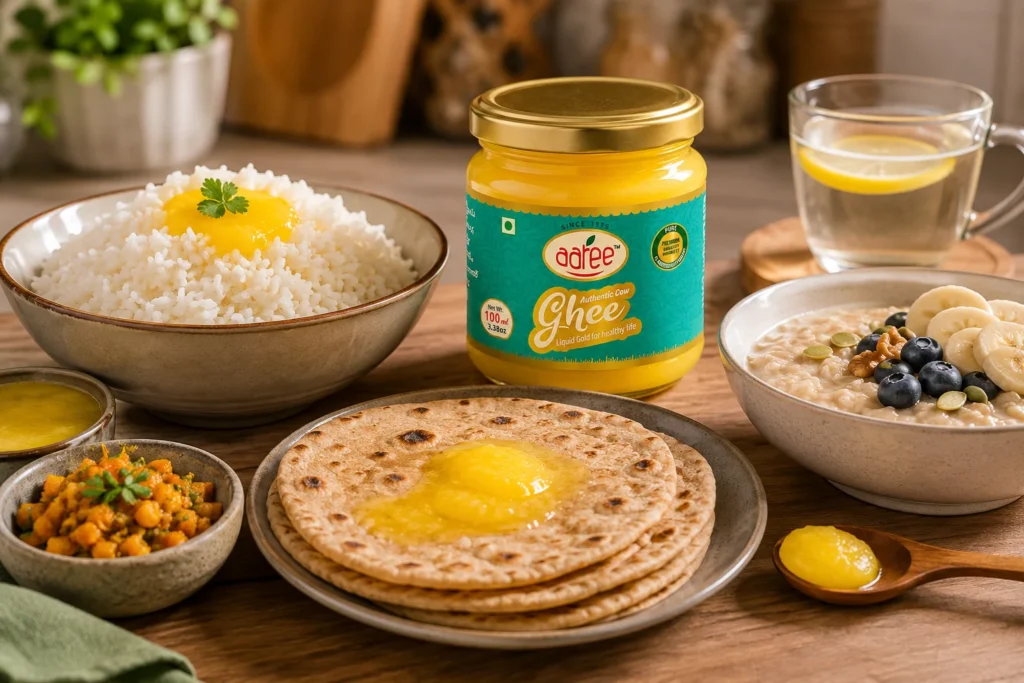
Many people look for simple ways to improve their daily wellness routine. Fortunately, cow ghee can be incorporated into meals in several practical ways.
For example, you can add a small amount of ghee to rice, chapati, vegetables, or soups. Additionally, many people use ghee as a cooking fat because of its rich flavor and versatility.
Cow ghee also has a relatively high smoke point. Therefore, it remains stable during many common cooking methods, including sautéing and roasting.
Best Time to Consume Ghee
The timing of food consumption can influence digestion and comfort. According to Ayurvedic traditions, warm foods and beverages are often preferred because they are considered easier to digest.
Many people enjoy adding a teaspoon of warm cow ghee to breakfast dishes such as oatmeal, millet porridge, or rice. This can be a simple way to include ghee in the daily diet.
Additionally, some Ayurvedic practices recommend consuming small amounts of warm ghee as part of evening wellness routines. However, individual needs may vary, and moderation is generally recommended.
How to Choose Authentic Bilona Ghee
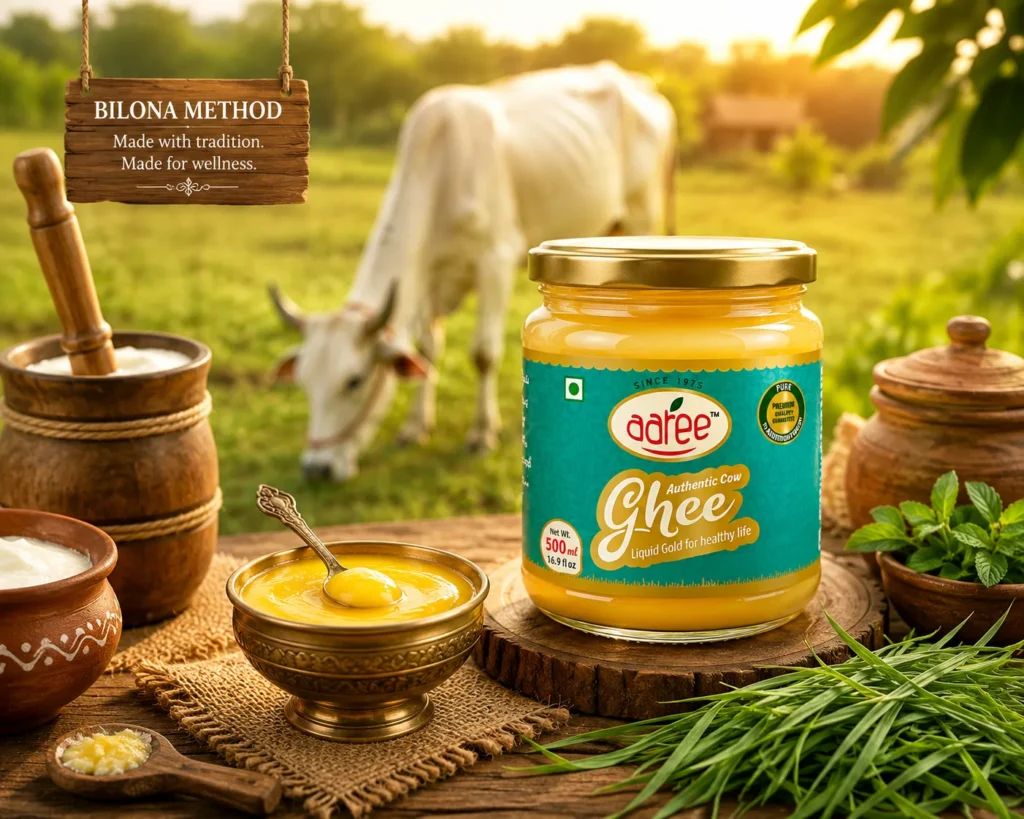
With many products available in the market, choosing the right cow ghee can sometimes feel challenging.
When shopping for ghee, look for products that mention traditional preparation methods such as bilona churning. In addition, labels that highlight cultured preparation techniques may indicate a more traditional approach.
You may also consider factors such as aroma, texture, ingredient quality, and sourcing practices. Traditionally prepared cow ghee often has a rich aroma, granular texture, and natural golden appearance.
Desi Cow Ghee and Dosha Balance in Ayurveda
Ayurveda explains health through the balance of three doshas: Vata, Pitta, and Kapha. Maintaining this balance is considered important for overall well-being.
Cow ghee has long been valued in Ayurveda for its nourishing and soothing qualities. Practitioners often include it in dietary recommendations designed to support balance, particularly for Vata and Pitta doshas.
Furthermore, Ayurvedic herbal formulations frequently use cow ghee as a carrier ingredient because it blends well with various herbs and natural ingredients.
Conclusion
Cow ghee continues to hold an important place in Ayurvedic healing and wellness traditions. Its traditional preparation process, nutritional profile, and versatile uses have made it a valued ingredient for generations.
Whether used in daily cooking, Ayurvedic dietary practices, or herbal preparations, cow ghee remains a popular choice among those seeking a more traditional approach to wellness. By choosing high-quality, traditionally prepared cow ghee, you can enjoy its rich flavor while incorporating an important part of Ayurvedic heritage into your lifestyle.
FAQs
Does desi cow ghee cause weight gain?
Desi cow ghee can be part of a balanced diet when consumed in moderation. Like all fats, it contains calories, so portion control is important.
Can lactose-intolerant people consume desi cow ghee?
Many people with lactose intolerance can tolerate ghee because the preparation process removes most milk solids. However, individual tolerance levels may vary.
How long does desi cow ghee last?
Properly stored desi cow ghee can last for several months at room temperature. Store it in a clean, dry container away from moisture and direct sunlight.
What is the difference between A1 and A2 desi cow ghee?
A2 desi cow ghee is made from milk obtained from native cow breeds that naturally produce A2 beta-casein protein. A1 ghee is made from milk containing A1 beta-casein protein. Many consumers choose A2 desi cow ghee because of its traditional significance and perceived digestibility.