
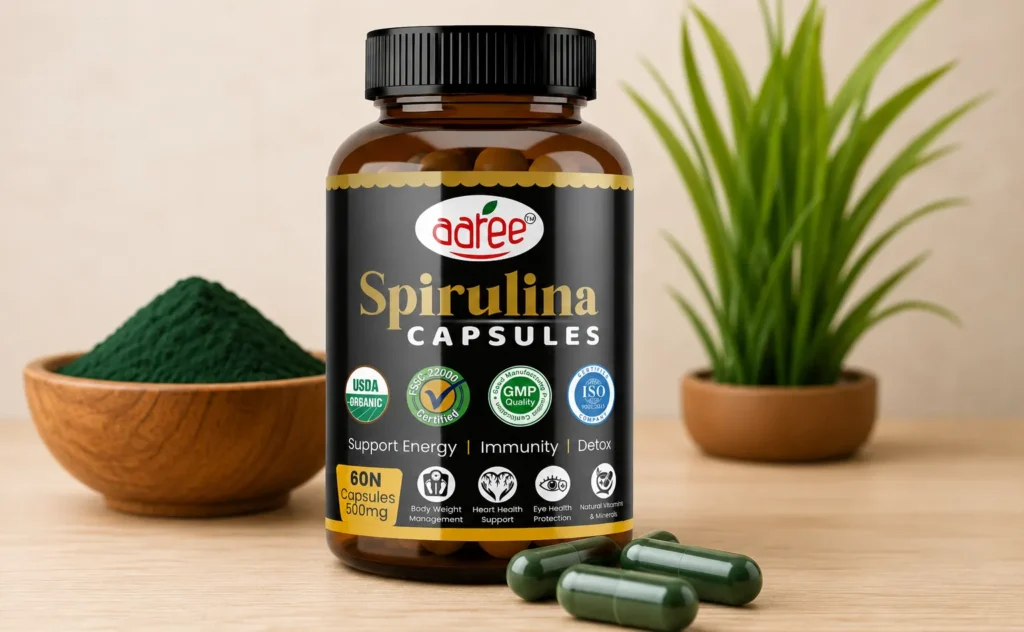
The benefits of spirulina capsules have gained attention worldwide as more people look for natural ways to support their health. Spirulina is a blue-green algae packed with protein, vitamins, minerals, antioxidants, and plant compounds that may contribute to overall wellness.
Unlike many supplements, spirulina offers a rich nutritional profile in a convenient capsule form. Moreover, it is easy to include in a daily routine without altering your diet significantly. While research continues, several studies suggest that spirulina may support immunity, heart health, energy levels, and antioxidant protection.
This article explores the science-backed benefits, nutritional value, dosage recommendations, possible side effects, and important precautions before adding spirulina capsules to your routine.
What Are Spirulina Capsules?
Spirulina capsules contain dried spirulina powder compressed into an easy-to-swallow form. Spirulina is a microscopic algae that naturally grows in freshwater and alkaline lakes.
It has been consumed for decades because of its impressive nutrient density. Additionally, capsules eliminate the strong taste that many people experience with spirulina powder.
Benefits of Spirulina Capsules for Overall Health
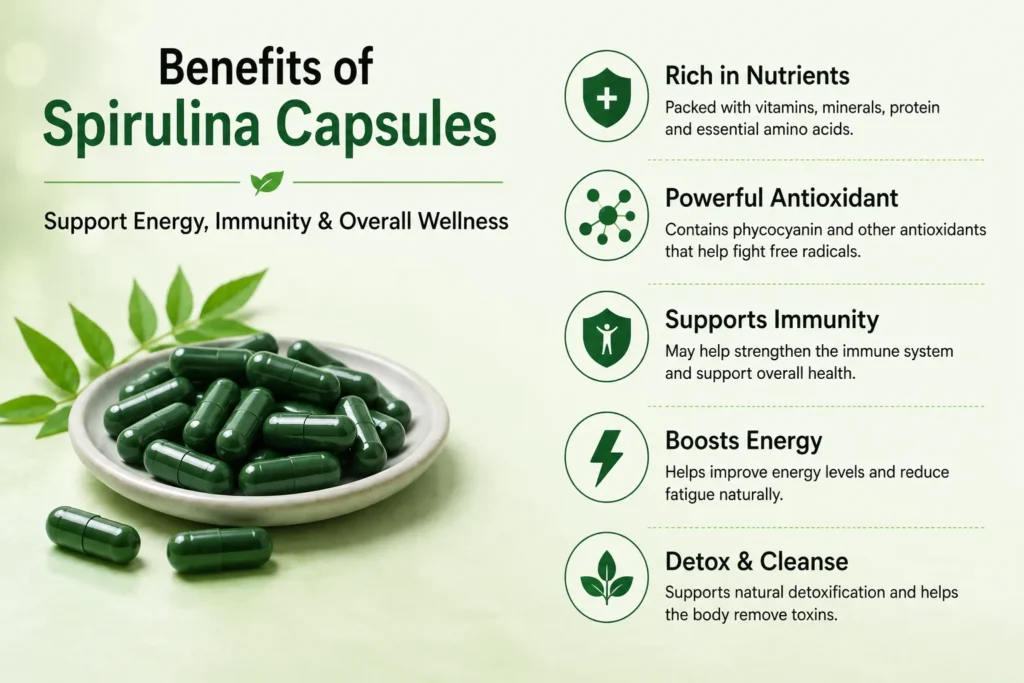
1. Rich Source of Plant-Based Protein
One of the biggest benefits of spirulina capsules is their high protein content.
Spirulina contains all essential amino acids, making it an excellent protein source for vegetarians and vegans. Protein supports muscle repair, tissue growth, and overall body function.
2. Packed with Powerful Antioxidants
Spirulina contains phycocyanin, a natural antioxidant responsible for its blue-green color.
Research indicates that antioxidants may help reduce oxidative stress caused by free radicals. Consequently, this may support healthy aging and overall cellular health.
3. May Support Immune Function
Some studies suggest spirulina may stimulate immune cells and enhance the body’s natural defense system.
However, more human research is needed before definitive conclusions can be made.
4. May Help Improve Energy Levels
Many users report feeling more energetic after regular supplementation.
This could be due to spirulina’s iron, B vitamins, protein, and antioxidant content, which contribute to normal energy metabolism.
5. Supports Nutritional Balance
Individuals with busy lifestyles often miss essential nutrients.
Adding spirulina capsules may help bridge nutritional gaps and support a balanced diet.
6. May Support Heart Health
Research suggests spirulina may help maintain healthy cholesterol and triglyceride levels when combined with a healthy lifestyle.
Additionally, its antioxidants may support cardiovascular wellness.
7. May Help Maintain Healthy Blood Pressure
Some preliminary studies indicate spirulina may promote nitric oxide production, which helps blood vessels relax.
Therefore, it may contribute to healthy blood pressure levels in some individuals.
8. May Support Healthy Blood Sugar Management
Some research suggests spirulina may help support normal blood sugar levels.
However, people with diabetes should continue prescribed medications and consult their healthcare provider before using supplements.
9. Supports Healthy Skin
Spirulina provides antioxidants and vitamins that may help protect skin cells from oxidative stress.
Consequently, regular intake may contribute to healthier-looking skin.
10. May Promote Healthy Hair
The protein, iron, and vitamins present in spirulina may support healthy hair growth and reduce nutritional deficiencies linked to hair problems.
11. Supports Exercise Recovery
Athletes and fitness enthusiasts may benefit from spirulina’s antioxidant properties.
Some studies indicate it may reduce exercise-induced muscle damage and fatigue.
12. May Support Weight Management
Spirulina is nutrient-dense yet low in calories.
Combined with a balanced diet and exercise, it may help increase satiety and support healthy weight management.
13. May Support Brain Function
Spirulina contains antioxidants that may help protect nerve cells from oxidative stress.
Research in this area remains ongoing, but early findings are encouraging.
14. Supports Iron Intake
Spirulina naturally contains iron, which supports normal red blood cell production.
People with low dietary iron intake may benefit from this nutritional source.
15. Convenient and Easy to Take
Unlike powders that require mixing, capsules are portable and convenient.
Therefore, they fit easily into busy daily routines.
Nutrition Table: Key Nutrients in Spirulina and Their Potential Benefits
| Nutrient | Potential Benefit |
| Protein | Supports muscle growth and repair |
| Iron | Helps maintain healthy red blood cells |
| Phycocyanin | Provides antioxidant protection |
| Beta-carotene | Supports eye and immune health |
| Magnesium | Supports muscle and nerve function |
| Potassium | Helps maintain fluid balance |
| Essential Amino Acids | Support tissue repair |
| Chlorophyll | May support detoxification processes |
| B Vitamins | Support energy metabolism |
Comparison Table: Spirulina Capsules vs Spirulina Powder
| Feature | Spirulina Capsules | Spirulina Powder |
| Taste | Tasteless | Strong algae taste |
| Convenience | Very easy | Requires mixing |
| Portability | Excellent | Moderate |
| Dosage Accuracy | High | Depends on measurement |
| Travel Friendly | Yes | Less convenient |
| Preparation | None | Needs preparation |
How to Take Spirulina Capsules
Most manufacturers recommend taking spirulina capsules with water after meals.
Beginners should start with a lower dose and gradually increase based on tolerance and healthcare advice.
Always follow the dosage mentioned on the product label.
Best Time to Take Spirulina Capsules
The best time depends on personal preference.
Many people take spirulina capsules:
- In the morning for energy support
- Before workouts
- With breakfast
- With lunch
Avoid taking large doses close to bedtime if you are sensitive to supplements that may increase alertness.
Possible Side Effects of Spirulina Capsules
Spirulina is generally considered safe for most healthy adults when consumed appropriately.
However, some individuals may experience:
- Mild digestive discomfort
- Nausea
- Headache
- Allergic reactions
- Temporary stomach upset
People with autoimmune disorders, severe allergies, or those taking blood-thinning medications should consult a healthcare professional before use.
Who Should Avoid Spirulina Capsules?
You should seek medical advice before taking spirulina if you:
- Are pregnant or breastfeeding
- Have autoimmune diseases
- Take immunosuppressant medications
- Have severe seafood or algae allergies
- Have phenylketonuria (PKU)
Scientific Research on Spirulina Capsules
Current scientific research suggests spirulina contains bioactive compounds with antioxidant, anti-inflammatory, and immune-supporting properties.
Several small human studies and laboratory research indicate potential benefits for cholesterol management, blood sugar support, exercise performance, and immune function.
However, many existing studies involve relatively small sample sizes. Therefore, larger and longer-term human clinical trials are needed to confirm these findings and establish optimal dosage recommendations.
For this reason, spirulina should be viewed as a nutritional supplement rather than a replacement for medical treatment.
Medical Disclaimer
This article is intended for educational and informational purposes only.It should not be considered medical advice, diagnosis, or treatment. Spirulina capsules may complement a healthy diet and lifestyle but should not replace prescribed medications or professional healthcare recommendations.Always consult a qualified healthcare provider before starting any new dietary supplement, especially if you have an existing medical condition or take prescription medications.
Frequently Asked Questions (FAQs)
Are spirulina capsules better than powder?
Both offer similar nutritional benefits. Capsules are simply more convenient and easier to consume for people who dislike the taste of spirulina powder.
Can I take spirulina capsules every day?
Yes, many healthy adults take spirulina daily within recommended doses. However, it is best to consult a healthcare professional for personalized guidance.
How long does it take to see benefits?
Some people notice changes within a few weeks, while others may require longer. Results depend on diet, lifestyle, and overall health.
Do spirulina capsules help with weight loss?
Spirulina capsules alone do not cause weight loss. However, when combined with a balanced diet and regular exercise, they may support healthy weight management.
Can diabetics take spirulina capsules?
Some studies suggest spirulina may support healthy blood sugar management. However, people with diabetes should continue prescribed treatment and consult their doctor before adding spirulina supplements.
Are spirulina capsules safe?
Spirulina is generally considered safe when sourced from reputable manufacturers and taken as directed. Choosing high-quality products helps reduce the risk of contamination.
Conclusion
The benefits of spirulina capsules extend beyond simple nutrition. They provide high-quality protein, antioxidants, vitamins, minerals, and plant compounds that may support immunity, heart health, energy production, and overall wellness.
Although current scientific evidence is promising, more large-scale human studies are needed to fully understand all of spirulina’s health effects. Therefore, spirulina capsules should be viewed as part of a balanced lifestyle rather than a cure or replacement for medical treatment.
Before making significant dietary changes or starting any supplement, consult a qualified healthcare professional to determine whether spirulina capsules are appropriate for your individual health needs.