
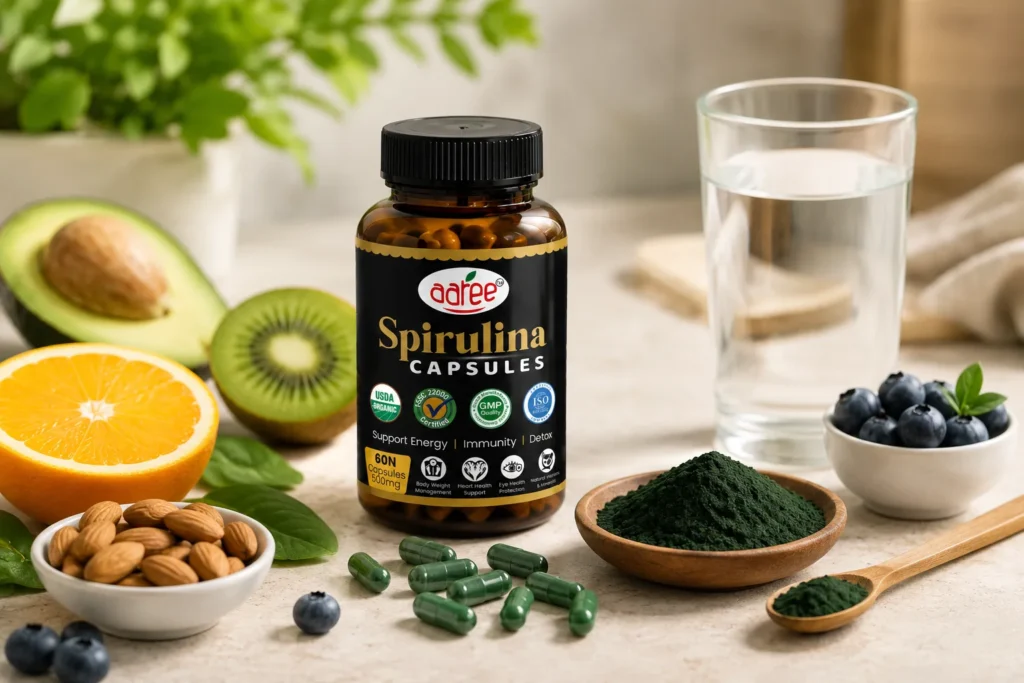
Healthy skin reflects overall wellness, and many people are now turning to natural superfoods to support their skincare routine. Spirulina for Skin has gained attention because of its rich nutritional profile and antioxidant content. Research suggests that spirulina may help protect the skin from oxidative stress, support hydration, and contribute to a healthy complexion when combined with a balanced lifestyle.
Although spirulina is not a miracle solution, its vitamins, minerals, proteins, and plant compounds may provide several skin-supporting benefits. Moreover, using it as part of a healthy diet may improve overall nutritional intake, which can indirectly benefit skin health.
In this article, you’ll learn how spirulina may support anti-aging, hydration, and acne management, along with its nutritional value, scientific evidence, possible side effects, and the best ways to include it in your routine.
Why Spirulina Is Good for Skin
Your skin constantly faces pollution, UV rays, stress, and environmental toxins. These factors may increase oxidative stress and contribute to wrinkles, dryness, and dullness.
Spirulina contains antioxidants that may help combat oxidative damage while supplying nutrients needed for healthy skin function.
Potential benefits include:
- May support collagen production
- May reduce oxidative stress
- May improve skin hydration
- May support wound healing
- May help maintain skin elasticity
- May contribute to an even-looking complexion
- May reduce inflammation associated with acne
However, results vary between individuals, and more human research is needed.
Spirulina for Skin and Anti-Aging Benefits
One of the biggest reasons people choose Spirulina for Skin is its potential anti-aging effect.
Skin aging occurs naturally with age, but environmental stress and poor nutrition can accelerate the process. Spirulina provides antioxidants that may help protect skin cells from oxidative damage.
How It May Help
- Supports healthy collagen formation through its nutrient profile
- May reduce free radical damage
- Helps nourish skin cells
- May improve elasticity
- Supports overall skin repair
Furthermore, antioxidants like beta-carotene and phycocyanin may help protect skin from everyday environmental stress.
Although promising, spirulina should complement a healthy skincare routine rather than replace sunscreen or dermatologist-recommended treatments.
Spirulina for Skin and Acne Support
Many people use Spirulina for Skin because they believe it may reduce acne and inflammation.
Acne develops due to multiple factors, including excess oil, bacteria, hormones, and inflammation. Spirulina’s antioxidant and anti-inflammatory compounds may help support healthier skin.
Potential Benefits
- May reduce inflammatory responses
- May support skin healing
- May decrease oxidative stress
- May provide nutrients involved in skin repair
However, spirulina does not cure acne. People with persistent or severe acne should consult a dermatologist for appropriate treatment.
Can Spirulina Improve Skin Hydration?
Hydrated skin appears smoother, healthier, and more radiant.
Spirulina contains amino acids, proteins, and essential fatty acids that may help support the skin barrier. A healthy skin barrier reduces moisture loss and helps maintain hydration.
Additionally, its antioxidant content may protect skin cells from environmental stress that contributes to dryness.
For best results, hydration should also come from:
- Drinking enough water
- Eating fruits and vegetables
- Using moisturizer regularly
- Getting adequate sleep
Comparison Table: Spirulina vs Other Popular Skin Superfoods
| Feature | Spirulina | Moringa | Chlorella |
| Protein | Very High | Moderate | High |
| Antioxidants | Excellent | Excellent | Good |
| Beta-carotene | High | High | Moderate |
| Chlorophyll | High | Moderate | Very High |
| Iron | High | Moderate | Moderate |
| Skin Hydration Support | May help | May help | May help |
| Anti-Aging Support | May help | May help | May help |
Each superfood offers unique nutrients, and none should replace a balanced diet.
Scientific Research on Spirulina and Skin
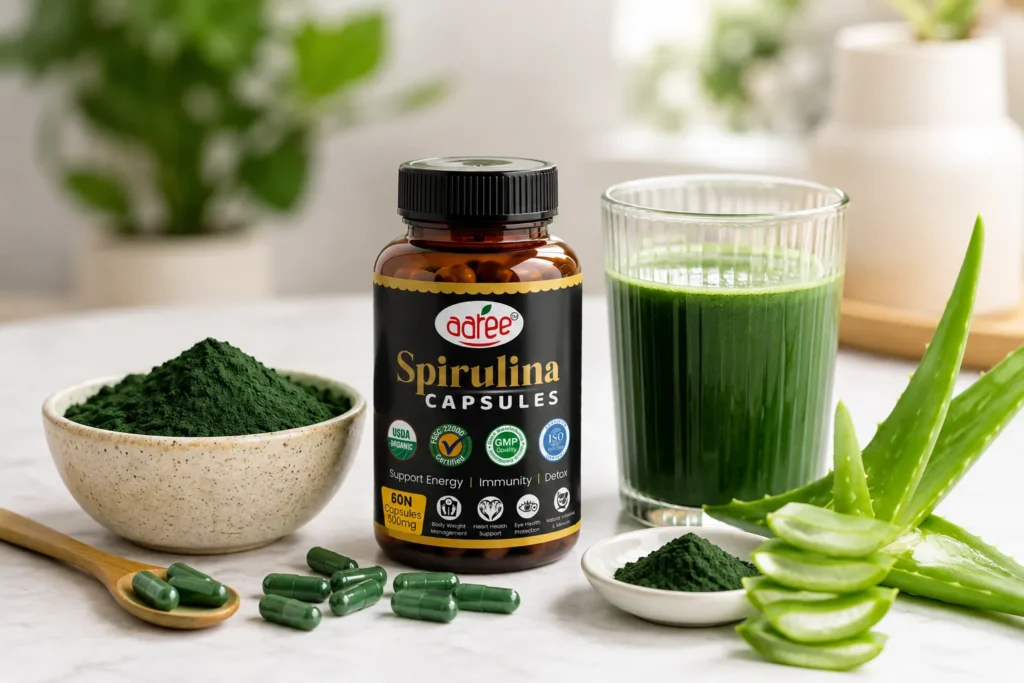
Several laboratory and animal studies suggest that spirulina possesses antioxidant and anti-inflammatory properties that may benefit skin health.
Some studies indicate that:
- Spirulina may reduce oxidative stress.
- It may support collagen preservation.
- It may improve wound healing.
- Certain compounds may protect skin cells from environmental damage.
However, high-quality human clinical trials remain limited. Therefore, while early findings are encouraging, more research is needed to confirm long-term benefits for skin health.
Current evidence supports spirulina as a nutritious dietary supplement rather than a proven medical treatment for skin conditions.
How to Use Spirulina for Skin Health
You can include spirulina in your daily routine in several ways.
Common Options
- Capsules
- Tablets
- Powder mixed into smoothies
- Juice
- Yogurt
- Protein shakes
Many people prefer capsules because they are convenient and have no strong taste.
It is generally advisable to follow the manufacturer’s recommended dosage or seek guidance from a qualified healthcare professional.
Lifestyle Tips to Maximize Skin Benefits
Spirulina works best when combined with healthy habits.
Consider these practices:
- Eat a balanced diet
- Stay hydrated
- Exercise regularly
- Sleep 7–9 hours
- Wear sunscreen daily
- Manage stress
- Avoid smoking
- Limit excessive sugar intake
Healthy skin depends on multiple lifestyle factors rather than one supplement alone.
Safe Use of Spirulina for Healthy Skin
Spirulina is widely consumed as a nutrient-rich superfood, and many people include it in their daily wellness routine without any problems. Nevertheless, individual tolerance can differ depending on overall health and dosage.
Starting with a small amount and increasing gradually may help your body adjust more comfortably.
When to Exercise Caution
Before adding spirulina to your diet, consider seeking medical advice if you:
- Have a weakened immune system
- Live with a chronic medical condition
- Use prescription medications regularly
- Are expecting a baby or currently breastfeeding
- Have a history of allergies to algae or seafood products
Choosing a high-quality spirulina supplement from a trusted manufacturer is equally important, as purity and manufacturing standards can vary between brands.
Listen to Your Body
If you notice unusual symptoms such as digestive discomfort, skin irritation, dizziness, or any allergic reaction after taking spirulina, discontinue use and consult a healthcare professional. Using supplements responsibly and following the recommended serving size can help minimize unwanted effects.
Frequently Asked Questions
Is spirulina good for glowing skin?
Spirulina may support glowing skin by providing antioxidants and nutrients that help protect skin cells and support overall skin health.
Can spirulina reduce acne?
Some studies suggest spirulina’s anti-inflammatory properties may help support acne-prone skin. However, it is not a medical treatment for acne.
How long does spirulina take to show skin benefits?
Results vary depending on diet, lifestyle, and individual health. Some people may notice improvements after several weeks of consistent use.
Can I take spirulina every day?
Many people consume spirulina daily within recommended amounts. However, consult a healthcare professional before starting any new supplement.
Is spirulina better than collagen supplements?
Spirulina and collagen serve different purposes. Spirulina provides nutrients and antioxidants, while collagen supplements provide collagen peptides. Both may have unique roles in supporting skin health.
Conclusion
Spirulina for Skin has become increasingly popular because of its impressive nutritional profile and antioxidant content. Research indicates that it may help support anti-aging, hydration, and acne-prone skin as part of a balanced lifestyle.
Nevertheless, spirulina should not be viewed as a cure for skin concerns. Healthy eating, hydration, sleep, sun protection, and proper skincare remain essential for maintaining healthy skin.
Before adding Spirulina for Skin to your daily routine, consult a qualified healthcare professional, especially if you have underlying health conditions or take medications.
Medical Disclaimer
This article is intended for educational and informational purposes only. It does not replace professional medical advice, diagnosis, or treatment. Spirulina may support overall skin health as part of a balanced diet and healthy lifestyle, but it should not be used as a substitute for prescribed medical care. Always consult a qualified healthcare professional before starting any new dietary supplement, particularly if you have existing medical conditions, are pregnant, breastfeeding, or taking medications.