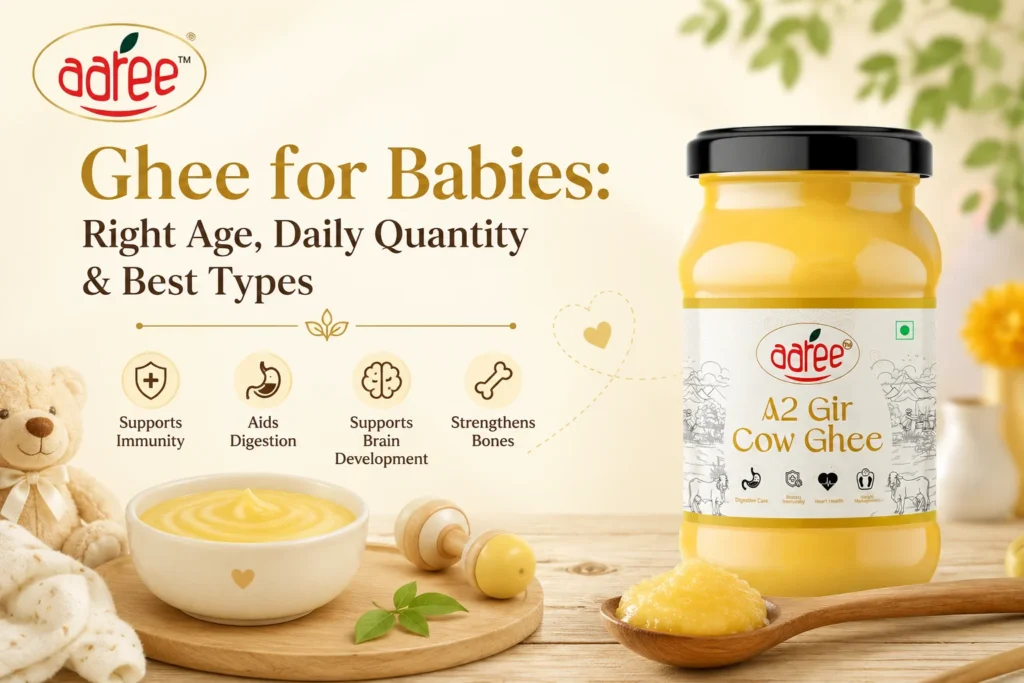
Ghee can be introduced to infants at around six months of age. Half a teaspoon to one teaspoon per day is recommended initially. Many parents prefer A2 ghee because it is often considered gentler and easier to digest.
Many new parents often ask whether ghee is safe for babies. Most parents start solid foods when their baby turns six months old. Families often look for nutritious additions to support healthy growth. Parents are increasingly re-evaluating traditional foods using modern health standards. Ghee, a form of clarified butter, remains one of the most trusted traditional foods. Growing babies need healthy fats for proper development. These fats provide concentrated calories. These healthy fats support brain development. This guide explains how to introduce ghee safely into your baby’s diet.
Disclaimer: This article is for informational purposes only and should not replace professional medical advice. Always consult your pediatrician before introducing new foods, including ghee, to your baby.
Why is Ghee Considered Good for Infants?
Ghee provides several nutritional benefits for infants. Ghee contains a high concentration of fat-soluble vitamins. Ghee contains vitamins A, D, E, and K. Vitamin D supports healthy bone development. This vitamin helps the body absorb calcium properly. Vitamin A helps support immunity. It also supports healthy eye development. Ghee can also support healthy digestion. Ghee also contains butyric acid in significant amounts.This acid helps nourish the gut lining. It may help reduce inflammation in the digestive tract.
The calories in ghee help support your baby’s energy needs. Infants have small stomachs, so they need nutrient-dense foods. Therefore, high-calorie foods are needed in tiny portions. This concentrated fat source fits your baby’s nutritional needs well. Ghee also provides essential fatty acids. It contains omega-3 and omega-6 fatty acids. These fatty acids support brain tissue growth. A baby’s brain grows rapidly during the first year. A diet rich in healthy fats supports optimal development.
At What Age Can Babies Start Eating Ghee?
Many caregivers wonder when they can introduce fats to their baby’s diet. Parents can safely introduce ghee when they begin solid foods. This developmental milestone is usually reached at six months. At this stage, an infant’s digestive system gradually learns to process complex fats. Parents usually begin with purees and mashed vegetables. Parents can easily mix ghee into these simple meals. Start with only a tiny drop at first.
Parents should carefully monitor for allergic reactions or digestive issues. Some infants may experience dairy allergies. Parents should also watch for signs of lactose intolerance. During the traditional clarification process, milk solids and lactose are mostly removed. As a result, many babies tolerate it better than regular butter. However, caution is still strictly advised by pediatricians. Pediatricians often suggest following the three-day wait rule. When introducing ghee to babies, parents should start slowly and increase gradually.
How Much Ghee Per Day Should Be Given?
Parents should measure the daily quantity carefully. Too much fat can be hard to digest. Too much fat can sometimes cause diarrhea or an upset stomach. Too little fat might not provide enough energy. Nutrition experts recommend specific daily amounts.
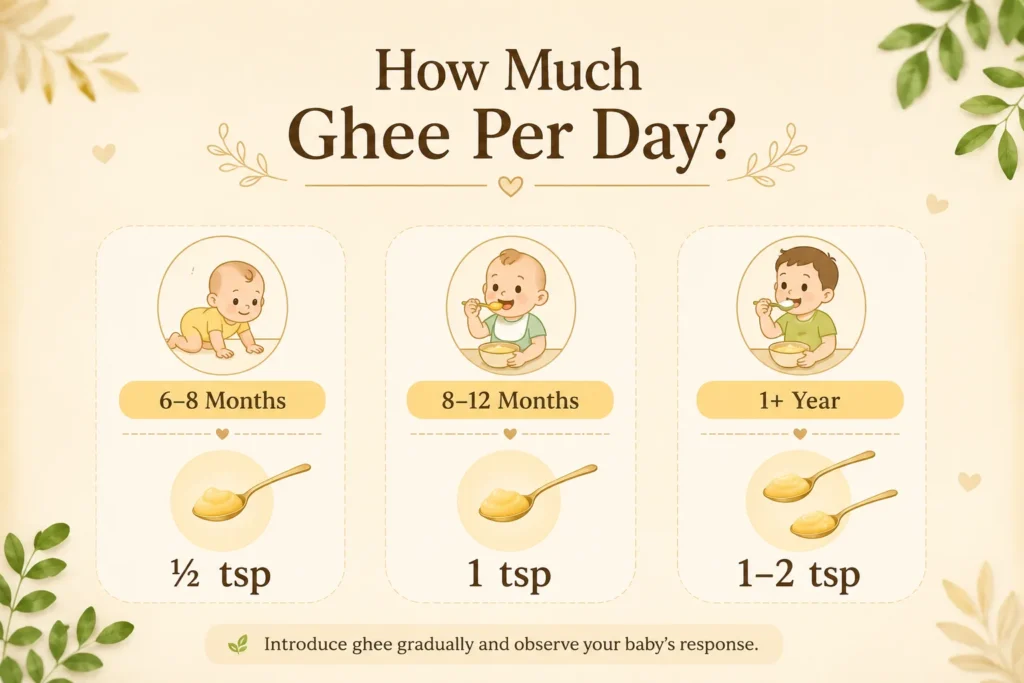
Experts generally recommend half a teaspoon per day for infants between six and eight months. Parents can gradually increase this amount over a few weeks. Parents can give babies between eight and twelve months up to one full teaspoon per day. Once a child turns one, parents can safely offer one to two teaspoons daily. Divide the total amount evenly across multiple meals. Overloading a single meal with pure fat is avoided this way. This helps your baby digest food more comfortably. Pairing ghee with carbohydrates and proteins helps maintain a balanced diet.
Normal Ghee vs A2 Ghee: Which is Best for Infants?
Parents can find different types of ghee in the market. Parents should understand the differences before choosing one.
What exactly is normal ghee?
Normal ghee is made from regular cow’s milk. This milk contains both A1 and A2 beta-casein proteins. Farmers usually produce this ghee from milk sourced from crossbred cows. Large quantities of milk are produced quickly by these cows. This type of ghee is widely available. It is also quite affordable. However, the A1 protein is sometimes linked to mild digestive discomfort. Inflammation in sensitive guts is occasionally caused by it.
What is A2 ghee?
A2 ghee is produced exclusively from the milk of indigenous cow breeds. This milk contains only the A2 beta-casein protein. Many producers use traditional bilona churning methods to make A2 ghee. Curd is churned into butter, and then the butter is heated. This slow method helps preserve nutrients better. It also creates a richer flavor. It may also offer a slightly different nutritional profile.
Which Option May Be Better for Your Baby?
Many parents prefer A2 ghee for its traditional preparation and perceived digestive comfort. A sensitive infant gut may digest the A2 protein more easily.. Less inflammation is caused by it. When looking at ghee for babies, maximum nutrition is absolutely desired. The traditional bilona method ensures higher overall quality. This process may retain more antioxidants and support a better lipid profile. Yes, a higher price is generally paid for A2 products. While A2 ghee may cost more, some families feel its traditional preparation and perceived benefits make it worth considering.
How Should Ghee Be Added to Baby Food?
Parents can add ghee to baby meals in several ways. You can lightly drizzle it over warm porridges. A few drops of ghee can make mashed sweet potatoes or carrots tastier. Khichdi, a traditional rice and lentil dish, is historically served with a dollop of it. It significantly improves the taste of bland introductory foods.
Roasting soft vegetables in a tiny bit of fat is another excellent option. Ghee helps your baby absorb fat-soluble vitamins from vegetables more effectively. Never give raw, unmelted ghee directly on a spoon. It should always be completely melted into warm food. This helps reduce the risk of choking.An even distribution of flavor is also ensured.
What is the Best Ghee for Babies in India?
Parents should choose a trusted, high-quality ghee brand. When shopping for ghee for babies, Always check the ingredient list for purity and quality. Many brands now offer ghee options in the Indian market.
Normal Ghee option
For parents choosing regular cow ghee, AAREE India Pure Cow Ghee can be a suitable option. Made from quality milk and prepared with care, it can be introduced in small amounts as part of a balanced baby diet, once your pediatrician approves starting solids.
A2 Ghee option (recommended)
For families looking for a more traditional and premium choice, AAREE India A2 Bilona Ghee is prepared using the traditional bilona method from indigenous cow milk. Many parents prefer A2 ghee because it is often considered gentler and easier to digest, making it a popular option when introducing ghee to babies.
What Are the Next Steps for Parents?
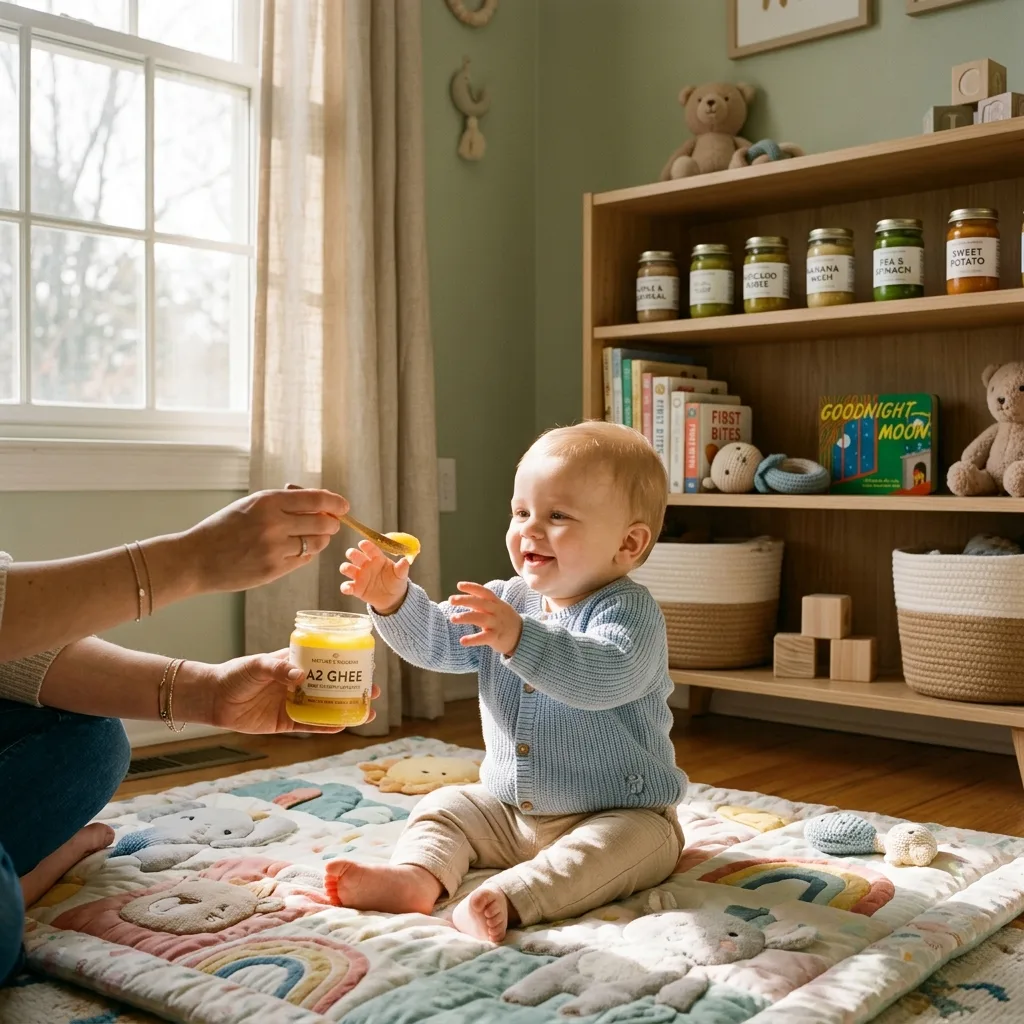
The introduction of solid foods is an exciting phase. Ghee can provide important nutrients that support a baby’s growth and development. It can be introduced safely at the six-month mark. The daily portions must be kept very small. Many parents choose A2 ghee because it is often considered easier to digest. A small drizzle of ghee can enrich warm, homemade meals. Always discuss diet changes with your pediatrician. Parents can choose a high-quality ghee that fits their baby’s needs and always introduce it gradually under pediatric guidance.
Choosing the right ghee for babies can support healthy growth when introduced in the right quantity and at the right age.
FAQs
Can ghee cause a cough or cold in infants?
No direct link is found medically between this fat and the common cold. In fact, immunity is boosted by the vitamins contained within it. However, if an undiagnosed dairy allergy is present, mucus production might be triggered.
Is ghee better than regular butter for a baby?
Yes, it is generally preferred over standard butter. Milk solids and whey are removed completely from it during heating. Therefore, it is tolerated much better by lactose-sensitive or dairy-sensitive infants.
Should it be given if the baby is currently overweight?
A pediatrician must be consulted first in this scenario. Good fats are absolutely needed for brain development. However, total daily calories must be monitored closely to prevent excessive weight gain.
Does it help with infant constipation?
Relief from constipation is often provided by a small amount of fat. The digestive tract is lubricated effectively by it. Bowel movements are smoothed and regulated when it is included in a high-fiber diet.