
What is bilona ghee? It is a traditional Indian clarified butter made by churning cultured curd instead of raw cream. The process is an ancient one, where butter is separated from the buttermilk by a wooden churner (bilona) and then slowly cooked to make ghee.
As consumer demand for traditionally prepared, minimally processed foods has increased, Bilona Ghee has become popular for its unique preparation, rich flavor and cultural importance. In this guide, you will learn how Bilona Ghee is made, how it differs from regular ghee and what to look for when buying an authentic product.
What Is Bilona Ghee?
If you want to understand what makes this ghee special, you must look at its name. The term “bilona” refers directly to the tool used to make it.
Meaning of Bilona Ghee
The word “bilona” comes from a wooden churner used in traditional Indian households. The heart of the process is this simple tool. It is traditionally rotated in two directions to help separate butter from buttermilk.
This is the ancient churning method used by families for centuries. They wrap a rope around the wooden churner. They pull the rope back and forth to churn the liquid inside a clay pot.
Why Bilona Ghee Is Different
Most commercial ghee is made from direct milk cream. Companies heat the cream to save time and money. This industrial process strips away many natural benefits.
Traditional bilona ghee is made from curd (yogurt) instead of direct cream. The maker ferments the milk into curd first. The fermentation step may contribute to improved digestibility for some individuals compared to products made directly from cream.
This traditional preparation process takes much longer. It requires more milk to produce a single jar. The makers focus strictly on quality over quantity.
How Is Bilona Ghee Made?
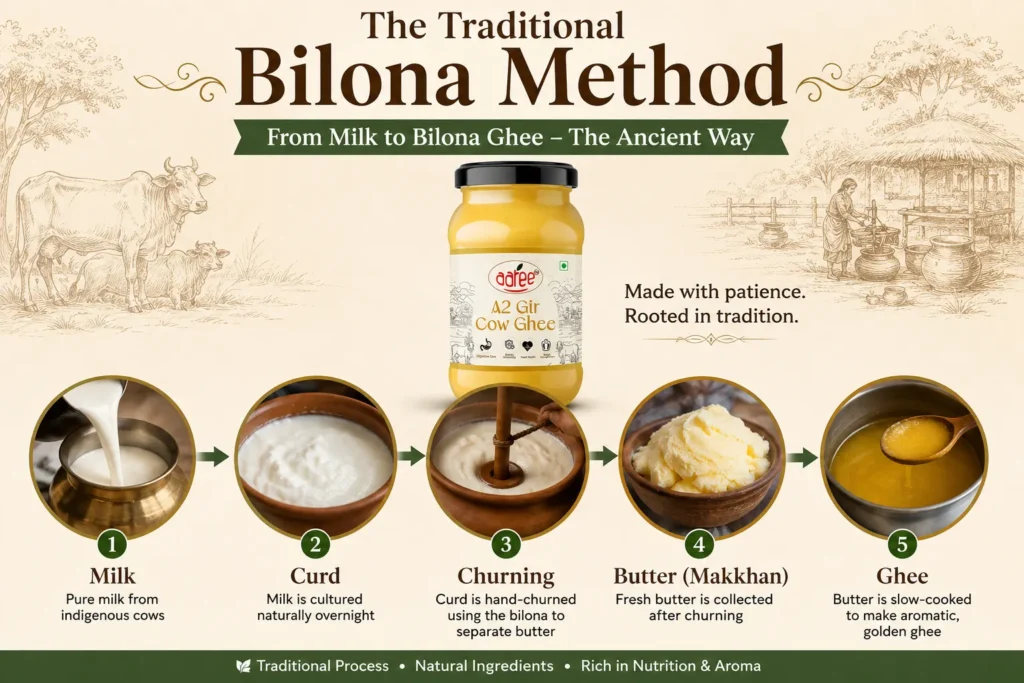
The classical approach consists of four separate stages. Authentic ghee requires each step to be done right.
Step 1 – Collecting Milk from Indigenous Cows
Great ghee starts with great milk. You cannot make high-quality ghee from poor-quality milk. The best makers use milk from indigenous Indian cow breeds.
The importance of milk quality cannot be overstated. Authentic makers follow traditional dairy practices. They allow the calves to drink first before milking the cows.
Step 2 – Converting Milk into Curd
The next step is boiling the milk and letting it cool down slightly. The maker then adds a small amount of natural starter culture. This culture begins the natural fermentation process.
The milk sits overnight and transforms into curd. This role of beneficial cultures is vital. The fermentation breaks down complex milk proteins into simpler forms.
Step 3 – Churning Curd Using the Bilona Method
This is the most labor-intensive part of the process. The maker places the curd in a clay pot. They use the wooden churner process to agitate the curd.
They add cold water during the churning. This helps to separate the butter from the buttermilk. The butter (makkhan) will float to the top and the buttermilk will remain at the bottom.
Step 4 – How to Make Ghee from Butter
The maker collects the fresh churned butter. They put it in a heavy-bottomed pot over a low flame. This old-school way of heating requires patience and constant monitoring.
The water evaporates slowly from the butter. The milk solids settle at the bottom and turn golden brown. This slow cooking allows for the development of aroma and texture.
The Traditional Bilona Process Explained
Understanding the process helps you appreciate the product. The traditional method is entirely different from modern factory production.
Bilona Method vs Industrial Ghee Production
The traditional approach respects the natural properties of the milk.It depends on human work and natural fermentation. No harsh chemicals, no high-speed machines.
Commercial manufacturing methods are designed for faster and larger-scale production. In factories cream is taken from the milk before it is fermented, by very fast centrifuges. They make ghee by the ton, heating the cream at high temperatures.
Why Does Bilona Method Take Longer
The traditional approach consists of multiple production steps. Fermenting the milk takes a full day. Churning the curd by hand takes hours of physical labor.
This method also has a much lower yield compared to industrial methods. It takes roughly 25 to 30 liters of milk to produce just one liter of traditional ghee. This low yield directly explains the higher price tag.
Benefits of Bilona Ghee
People do not pay higher prices just for the tradition. They buy this ghee because it offers clear advantages.
May Support Digestion
Many people find regular dairy hard to digest. The fermentation process used in this ghee changes that. The cultures break down lactose and casein before the butter is even churned.
This explains its traditional use in Indian diets. Families have long used it as a cooking fat that sits lightly on the stomach.
According to dairy nutrition research, fermentation can partially break down lactose and milk proteins, which may contribute to improved digestibility for some individuals.
Source of Healthy Fats
Your body needs good fats to function properly. Traditional ghee is an excellent source of healthy fats. It contains short and medium chain fatty acids.
These naturally occurring fats in ghee give you steady energy. They also aid your body to absorb fat-soluble vitamins from your food.
Ghee is a natural source of fat soluble vitamins including A, D, E and K, and short chain fatty acids that have been the subject of much research in dairy nutrition.
Full Flavor and Aroma
The Bilona Ghee prepared in the traditional way is famous for its rich, nutty aroma and grainy texture, which are usually attributed to the traditional process of curd-churning and slow-cooking. It doesn’t smell like the oily flat smell of factory ghee.
These taste differences over regular ghee make your cooking better. Simple dishes get a deep, complex flavour from one spoon of real ghee.
Traditionally Valued in Ayurveda
This is an exceptional ingredient in ancient Indian practices. Ghee has been narrated as an important dietary ingredient and a carrier for herbal preparations in the traditional Ayurvedic texts like Charaka Samhita since a long time.
We note its historical significance and traditional use here. It has been used for centuries to carry herbal preparations deep into the body’s tissues.
How to Identify Authentic Bilona Ghee

The market is full of fake products. Many brands use the word “bilona” on their labels without actually following the process. Here is how to protect yourself. Consumers can also check whether the product complies with applicable food quality standards established by regulatory authorities such as FSSAI.
Check the Ingredient List
Turn the jar around and read the label. You should see minimal ingredients. It should only list milk fat or clarified butter from a specific cow breed.
Understand the Production Method
Read the brand’s website. Look for a clear curd-churning process. If the brand does not mention fermenting milk into curd, they are likely just heating raw cream.
Evaluate Aroma and Texture
Trust your senses. Authentic ghee has traditional sensory characteristics. It should have a grainy texture and a rich, nutty smell. If it smells like plain cooking oil, it is probably heavily processed.
Verify Brand Transparency
Good companies hide nothing. Look for manufacturing details on their packaging. They should proudly explain their process.
They should also provide clear sourcing information. You want to know exactly where the milk comes from and how the cows are treated.
Is Bilona Ghee Worth Buying?
We know what is bilona ghee, but is it worth the money? This depends entirely on your priorities.
When Bilona Ghee may be suitable for you is clear. Choose it if you value traditional food preparation. Choose it if you want better flavor and easier digestion.
Several factors affect its value. The quality of the milk and the labor involved justify the cost. You are paying for purity.
The importance of choosing a trusted manufacturer is the final piece of the puzzle. Do your research. Buy from makers who prove their methods.
Who Should Consider Bilona Ghee?
Bilona Ghee may be suitable for:
- Individuals seeking traditionally prepared dairy products
- Consumers interested in indigenous cow-based products
- Home cooks looking for richer flavor and aroma
- Those who prefer minimally processed foods
It may not be suitable for individuals with specific dietary restrictions or dairy allergies.
About AAREE India
AAREE India publishes educational content on traditional dairy products, natural nutrition, and wellness practices. We use traditional knowledge sources, resources from the dairy industry and publicly available food safety information in our research for content.
Conclusion
The Bilona Ghee is a traditional method of making ghee in which the milk is first converted in to curd, then churned in to butter and then the butter is slowly cooked to make ghee. This is the age-old process that distinguishes it from most commercially produced ghee.
If you are looking for a dairy product made in the traditional way, rich in aroma, distinctive flavor and authenticity of the method of preparation, then you may want to try Bilona Ghee. Shop for a brand that is transparent about their sourcing & manufacturing process.
Frequently Asked Questions
What are the ingredients of bilona ghee?
Bilona Ghee is made from cow milk that is first cultured into curd, then churned into butter and then slowly cooked to ghee.
Why is Bilona Ghee Expensive?
The production of Bilona Ghee involves large quantities of milk, several preparations and considerable manual effort leading to increase in production costs.
Is Bilona Ghee same as A2 Ghee?
Nope. Bilona is the traditional method of churning and A2 is a variety of milk protein. Ghee can be either Bilona, A2 or both.
How is Bilona Ghee different from regular ghee?
Bilona Ghee is made from fermented curd. Regular ghee is generally made from cream by direct industrial process.
Can you cook with Bilona Ghee?
Yes. Bilona Ghee is best for everyday cooking, sautéing and frying because of its high smoke point.
How to Store Bilona Ghee Properly?
Store Bilona Ghee in an air tight container, at a cool and dry place away from direct sunlight. Always use a clean, dry spoon.